Waterproof and UV-resistant canopy fabric
Solution dyeing — where color is applied to the fiber before weaving, not printed on the surface afterward — is what determines how long the fabric looks right under direct sunlight. Surface-printed outdoor fabric fades within two to three seasons under heavy UV exposure. Solution-dyed fabric retains its color for ten years or more in the same conditions. The waterproof treatment is rated to a hydrostatic head pressure that handles normal rainfall without seepage. Mildew and salt-air resistance are properties of the fabric treatment, not maintenance requirements.
Rust-free aluminum frame throughout
Arms, roller tube, cassette housing, and wall brackets are all 6063-T5 alloy with chromate primer and powder topcoat. The frame doesn’t rust at the bracket bolt holes, doesn’t need annual repainting, doesn’t corrode in coastal or high-humidity environments. The powder coat holds color and adhesion for fifteen-plus years under direct UV without recoating.
Retractable or fixed — same frame system, different hardware package
The structural frame is consistent across both configurations. Retractable models add the roller cassette and either a motorized tubular motor or a manual crank mechanism. Fixed models use a rigid arm connection in place of the cassette. Swapping between configurations after installation is possible but easier to specify correctly from the start.
Projection 1.5 m to 6.0 m, width 1.0 m to 12.0 m
Width above single cassette capacity is achieved through multi-cassette configurations with a shared front rail. The cassette joints are designed to be visually clean — the seam between cassettes isn’t a visible gap in the fabric.
Motorized retractable — wall switch, remote, wind sensor option
The 24V DC tubular motor runs quietly. Wind sensor integration triggers automatic retraction when wind speed exceeds the set threshold — the fabric retracts before it takes damage from a gust, without anyone needing to be there to operate it. Worth specifying on sites where the awning is regularly left extended and unattended.
Manual crank option
Lower cost, no power connection required. Practical for locations with predictable weather patterns where the awning is extended in the morning and retracted in the evening on a consistent schedule.
Aluminum Frame and Outdoor Fabric — Why Each Material Handles Its Role
The frame and the fabric are doing structurally different things, and the right material for each role is different as a result.
The frame — arms, roller tube, cassette housing, wall brackets — is under mechanical load. It carries the weight of the extended canopy, resists the moment force of wind on the projected fabric panel, and lives outdoors permanently whether the awning is retracted or extended. Aluminum handles those demands without corroding at the bracket bolts, fatiguing at the arm pivot joints, or requiring the periodic recoating that keeps painted steel hardware functional over a decade of outdoor exposure. The powder coat over chromate primer on the aluminum frame is doing UV and color work; the corrosion resistance comes from the material itself.
The fabric is doing a different job — intercepting UV and rain from above, being lightweight enough that the motor or manual crank can move it, and being foldable without cracking or stiffening over thousands of retraction cycles. Metal can’t do that. The solution-dyed acrylic or polyester weave is the correct material for that role because it’s lightweight, foldable, UV-stable through the fiber structure (not a surface coating), and can be treated for waterproofing without adding significant weight or stiffness.
The detail that trips up cheaper awning systems is the waterproof treatment degrading before the fabric structure does. The hydrostatic head rating on JHR fabrics is specified for normal rainfall conditions and maintains its effectiveness through years of wet-dry cycling without retreatment. When the fabric eventually needs replacing — after a decade or more of regular use — replacement rolls are available for all standard cassette sizes. The frame hardware doesn’t need to change.
Retractable vs Fixed — Making the Right Choice
The decision between retractable and fixed awning is mostly a question of how the space is used and how often the weather changes.
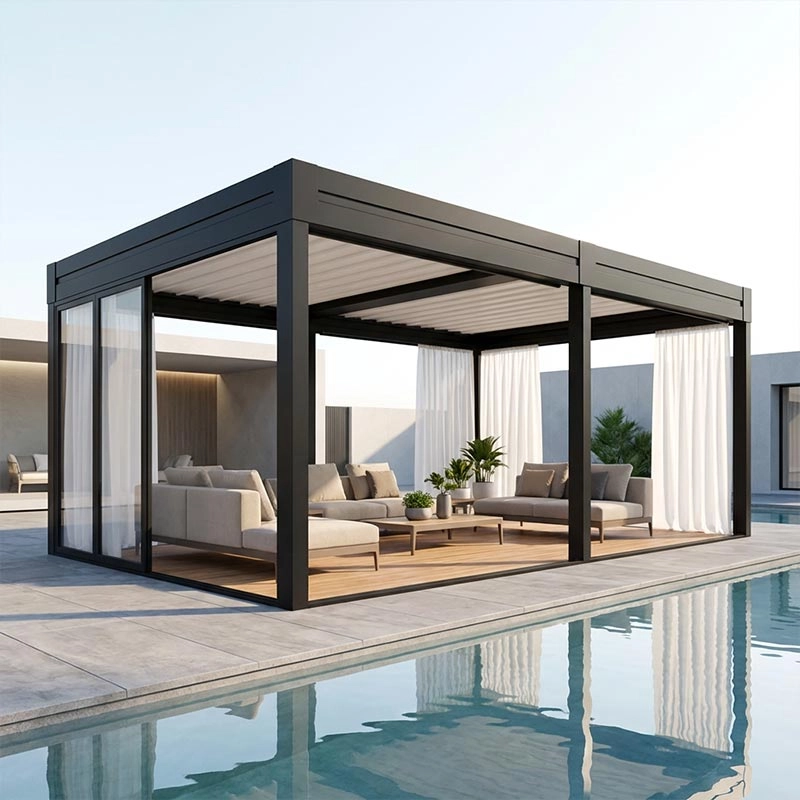
Retractable is the right choice when the space has two modes — covered and open — and when users actually want the open option. A restaurant terrace where diners prefer open sky on clear evenings. A private patio where the owner wants afternoon shade but morning sun. A retail storefront where the awning goes out during business hours and retracts at night. Motorized models handle this with a wall switch or remote; the wind sensor handles it automatically when the owner isn’t there to operate it. Manual crank models are fine for schedules that are consistent and predictable.
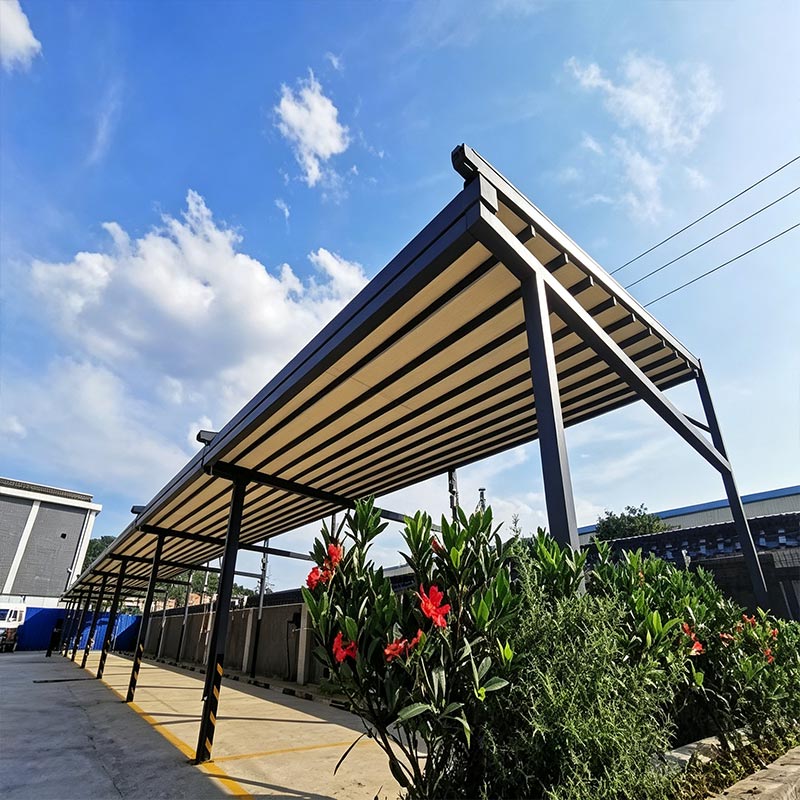
Fixed awnings work better when coverage is always needed and retraction is never required. Shop entrance weather protection where pedestrians pass continuously. Walkway coverage between buildings. Building facade shading where the architectural intent is permanent horizontal screening. Fixed awnings are simpler to install, carry a lower hardware cost, and the pitch angle can be optimized during installation for rain run-off direction in a way that a retractable system’s geometry doesn’t allow. If the space will always be shaded, a fixed awning is the more cost-effective and structurally simpler specification.
The thing to avoid is specifying retractable when fixed would do the job — the hardware cost is higher and the motorized mechanism adds a maintenance item. And avoid specifying fixed when the space genuinely needs both modes — a fixed awning that blocks the sky when the weather is perfect is an installation that the owner learns to regret.
Product Specifications
Technical Item
|
Specifications & Details
|
| Product Type |
Aluminum Awning — Retractable (motorized or manual) or Fixed configuration |
| Frame Material |
6063-T5 Aluminum Alloy — arms, roller tube, cassette housing, wall brackets |
| Frame Finish |
Chromate primer + powder topcoat — standard or custom RAL colors |
| Canopy Fabric |
Solution-dyed acrylic or high-density polyester outdoor textile |
| Fabric Treatment |
Waterproof coating (hydrostatic head rated); UV-resistant; mildew and salt-air resistance |
| UV Protection |
Blocks up to 95% of UV radiation (UPF 50+ rated fabric options available) |
| Projection (Depth) |
1.5 m to 6.0 m (customizable) |
| Width |
1.0 m to 12.0 m per cassette; multi-cassette configuration for wider runs |
| Pitch Angle |
5° to 45° (fixed models); motorized models adjustable via control system |
| Retraction System |
Motorized (24V DC tubular motor with remote / wall switch / wind sensor) or manual crank |
| Wind Resistance |
Frame rated to Beaufort scale 6 (strong breeze, ~50 km/h); retract in high wind |
| Drainage |
Integrated front valance channel; pitch angle directs rain run-off away from facade |
| Application |
Residential patios, balconies, pool decks, restaurant terraces, retail storefronts, hotel outdoor areas, school and office building facades |
| Customization |
Projection, width, frame RAL color, fabric color and pattern, motor brand, control interface, wind sensor, LED lighting option |
Installation and Maintenance
Wall brackets bolt to any load-bearing masonry, concrete, or steel facade using standard anchor fixings supplied with the unit. The bracket spacing and anchor specification depend on the projection and fabric weight — JHR provides the fixing layout for each order, not a generic template. The roller cassette drops into the bracket seats and locks in place; for motorized units, the motor lead connects to the control transformer inside or adjacent to the bracket mounting area.
A two-person team completes a standard residential retractable awning in two to four hours including motor wiring and limit switch adjustment. Commercial installations covering wide frontages with multiple cassettes typically run one working day. No specialist trades required — drill, standard hand tools, and someone who has read the installation drawings.
Maintenance is genuinely minimal if the fabric is managed correctly during retraction. The main risk to an awning fabric is retraction while wet — moisture trapped inside the cassette can promote mildew growth over time in a dark, unventilated space. The operating instruction is to allow the fabric to dry before retracting after rain wherever practical, and to brush off leaf debris periodically so it doesn’t hold moisture against the fabric surface. The aluminum frame needs nothing — no repainting, no retreatment. The motor and limit switches on retractable units should be checked annually; the adjustment takes fifteen minutes and doesn’t require a technician.
Replacement fabric rolls are available for all standard cassette sizes. When the fabric eventually needs refreshing — after ten or more years of regular outdoor use — the frame hardware stays and only the fabric changes.
Projection, width, configuration (retractable or fixed), frame color, and fabric preference are enough to start a quote. One working day for specification sheet and pricing.