Rust-free, permanently
The 6063-T5 alloy forms a stable oxide layer on contact with air. That’s not a coating that can be scratched off; it’s a surface reaction of the metal itself, and it re-forms when the surface is cut or abraded. The powder coat over it is for color and UV resistance. The corrosion protection is underneath, in the material.
Panel height from 0.6 m to 2.4 m, width from 1.0 m to 3.0 m per panel
Standard production covers the full range of residential and commercial boundary heights. Custom dimensions are available; the profiles are cut and assembled to order, not pulled from stock.
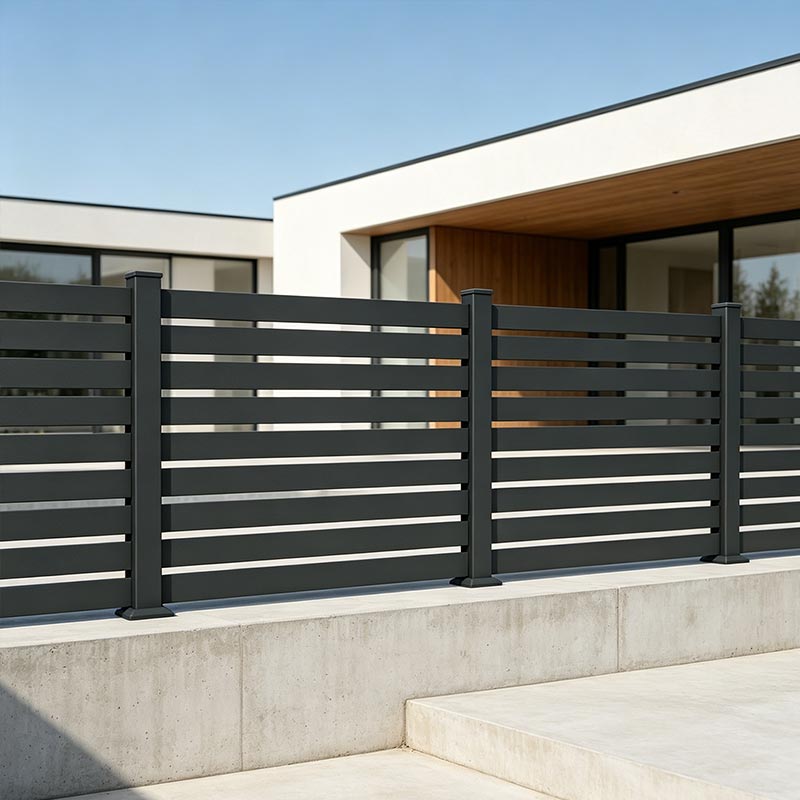
Horizontal slat, vertical picket, full privacy board, louvered slat
Four distinct visual styles, same post system, same connection hardware. A single perimeter can use different panel styles in different sections — horizontal slats along the road frontage, privacy board along the shared boundary — while the post color and specification stay consistent throughout.
Slat spacing fully adjustable
Tighter spacing for visual privacy; wider spacing where the fence is more zone-marker than screen. The structural frame stays the same; the slat count and gap change.
Full RAL color range, custom matching available
The chromate primer gives the powder coat proper adhesion to the aluminum substrate. Color durability on this system — UV fade resistance, surface adhesion — is better than direct-to-aluminum paint or direct-to-steel powder coat, because the primer layer is doing actual adhesion work rather than relying on mechanical bonding to a bare metal surface.
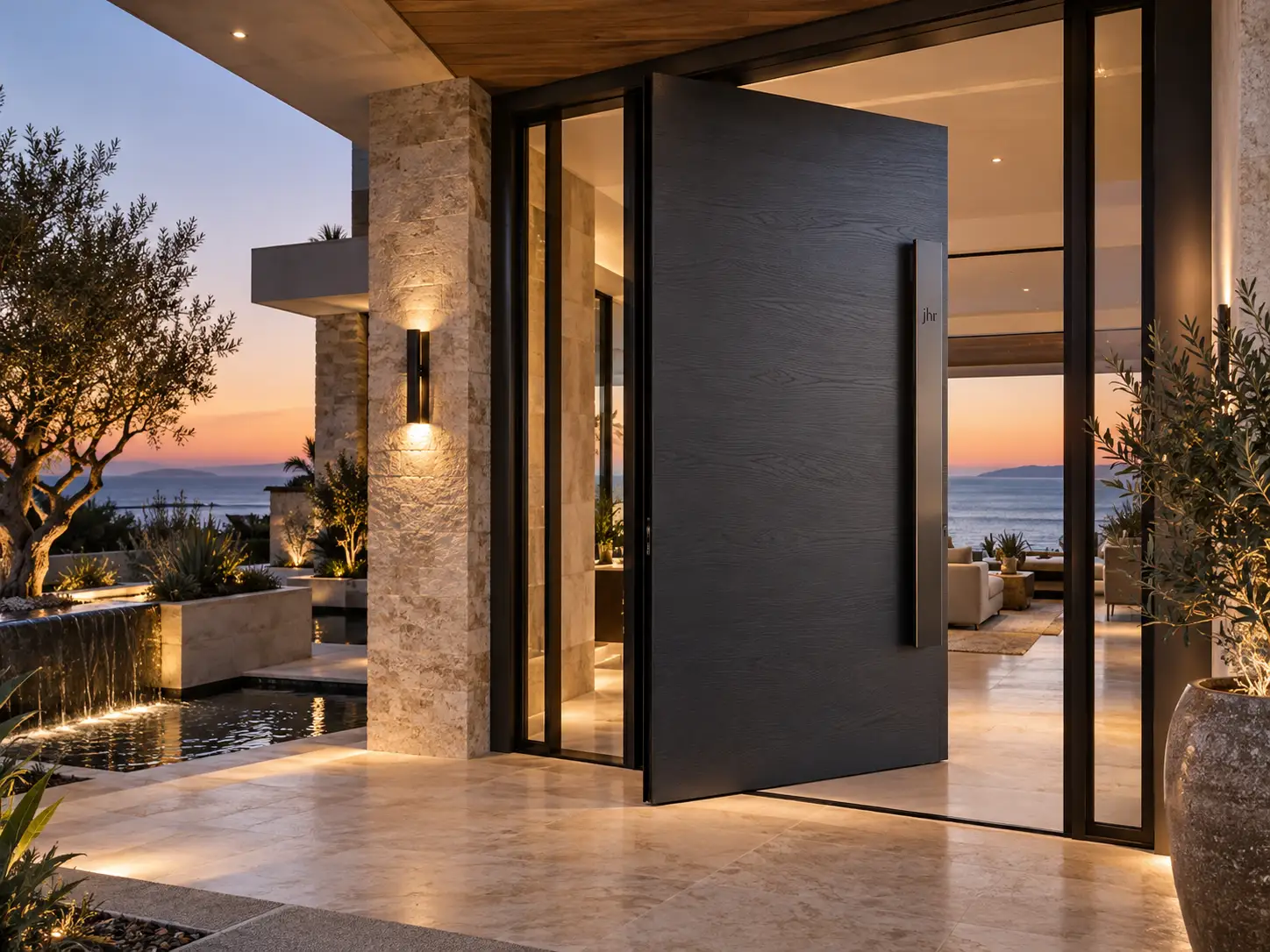
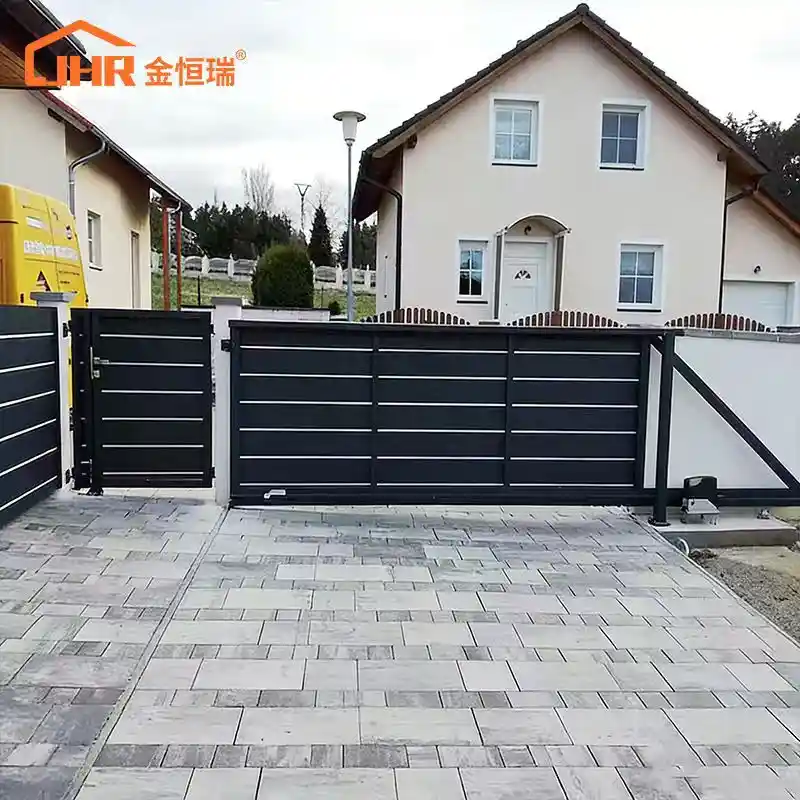
Matches JHR gate products
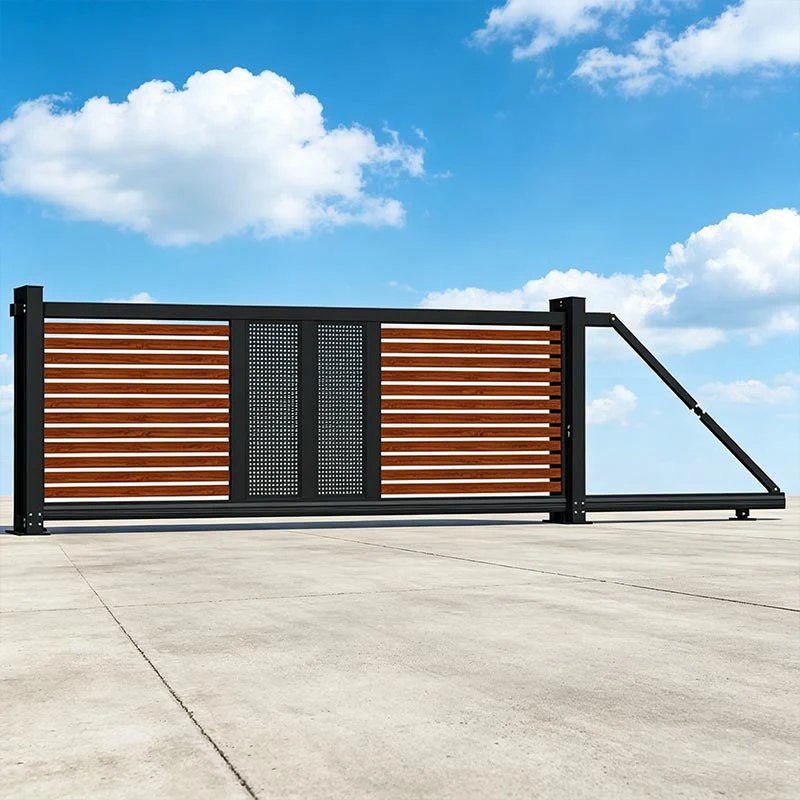
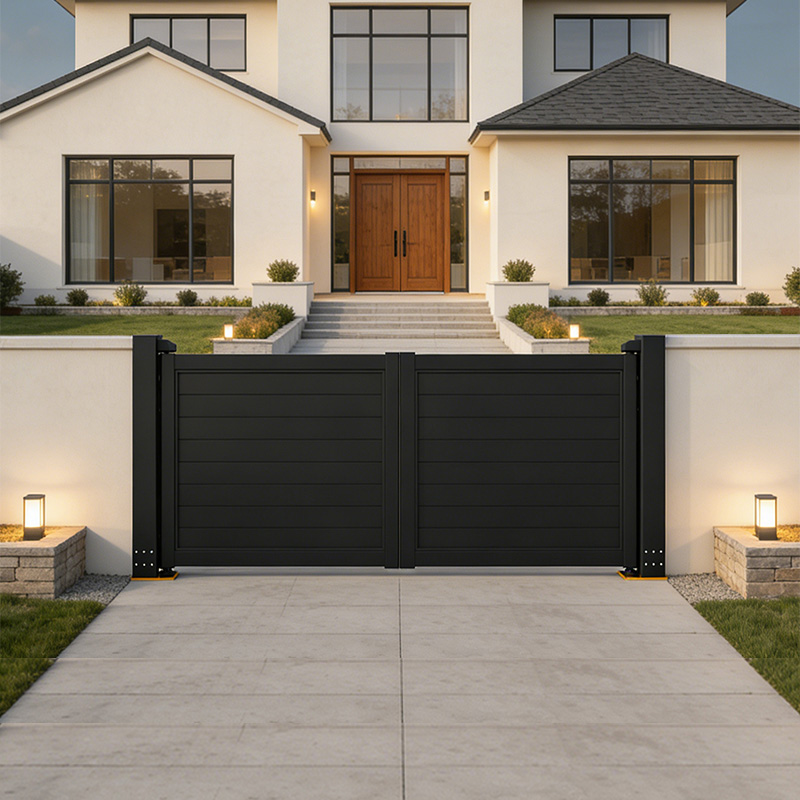
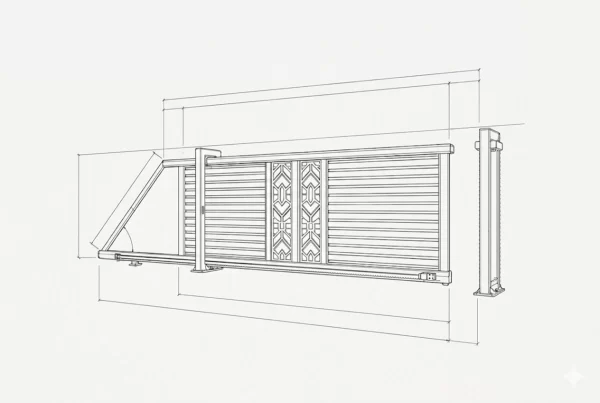
Pedestrian gates and driveway gates are available in the same slat style, panel height, and RAL color as the fence panels. Hardware is included. The perimeter reads as one system, not a fence from one supplier and gates from another.
The Real Cost of the Alternatives
The upfront price of a fence is rarely what makes the decision complicated. What makes it complicated is that cheaper fence materials hide their costs in the maintenance schedule, and most buyers don’t price that in at the quoting stage.
Timber is the clearest example. A timber slat fence in a moderate climate needs restaining or repainting every two to three years to stay structurally sound and presentable. Skip a cycle, and the bottom rails start absorbing moisture. Skip two, and the board ends begin to split. By year eight or ten, the conversation shifts from maintenance to replacement. The cost of that original cheaper fence — material, labor, and the maintenance interventions over a decade — frequently exceeds what an aluminum fence would have cost at the start.
Steel fencing has a different failure sequence but a similar outcome. The zinc coating on galvanized steel protects the base metal everywhere it’s intact, but it isn’t intact at cut edges, drilled holes, and weld zones — the points where the fabrication process removes or thins the coating. Those are exactly the points where moisture sits and where rust starts. The rust doesn’t declare itself immediately; it propagates under the paint film for months before it’s visible on the surface. When it does appear, the remediation involves grinding back to bare metal, repriming, and recoating — not just painting over the stain.
Aluminum doesn’t have either failure mode. The oxide layer covers the entire surface, including cut edges and fastener holes, because it forms from the metal itself rather than being applied as a separate coating. On a straight cost-of-ownership calculation over fifteen or twenty years — including zero repainting cycles, zero rust remediation, and no structural replacement — aluminum sits below timber and treated steel by a margin that’s harder to argue with the longer the ownership horizon gets.
Style Configurations
The panel styles in the JHR aluminum fence range are built on the same post and connection system, so the structural specification is identical across all of them. What changes is the infill, and that decision is almost entirely driven by context.
Horizontal slats are the most commonly specified style in contemporary residential and commercial projects, and have been for the better part of a decade. The clean parallel lines read as an intentional design choice rather than a functional afterthought — which matters when the fence is the first thing visible from the street. Slat spacing adjusts to suit the privacy requirement: close-spaced for near-opaque screening, open-spaced for a lighter visual weight where full enclosure isn’t the goal.
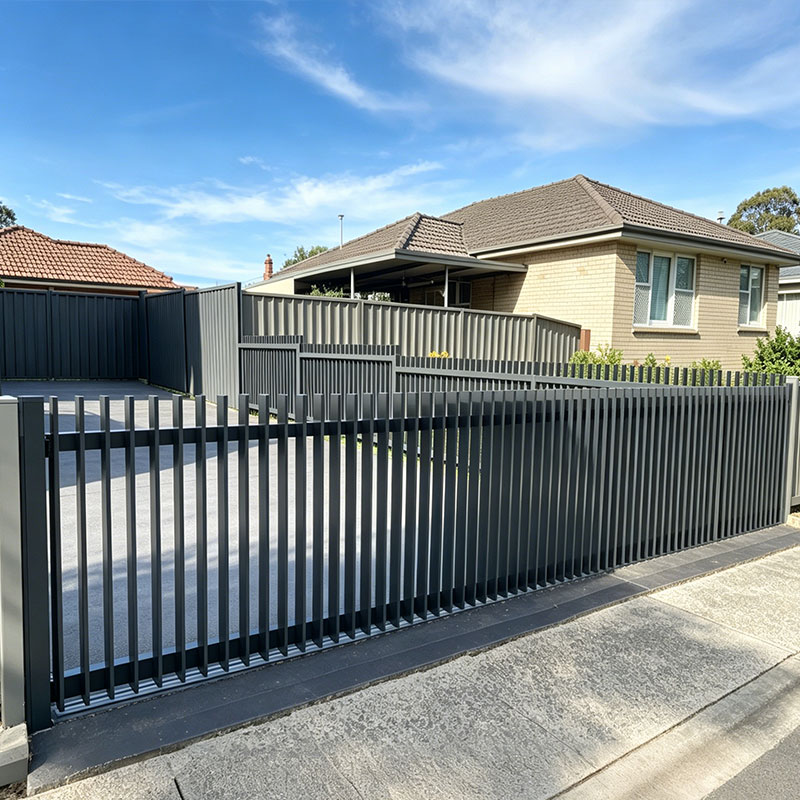
Vertical pickets work where the horizontal line would read out of context — traditional residential properties, heritage-adjacent streetscapes, sites where the surrounding fence line is already vertical and a switch to horizontal would be visually jarring. Picket width and spacing adjust within the standard frame.
Full privacy board panels are specified when partial sightlines aren’t acceptable. Road-fronting properties where pedestrian traffic passes close to the boundary, poolside enclosures where the owner simply doesn’t want to manage the question of visibility through slat gaps, commercial perimeter screening where the operational interior shouldn’t be visible from the public boundary. The full panel closes the sight line without requiring a masonry wall.
Louvered slat panels — angle-adjustable — are the option when airflow matters alongside privacy. Commonly specified for poolside and terrace enclosures where solid screening would create a dead air pocket, or for commercial applications where ventilation requirements conflict with visual screening.
Mixing styles across sections of the same perimeter is straightforward because the post system is shared. The posts go in first; the panel style is selected section by section after that.
Product Specifications
Technical Item
|
Specifications & Details
|
| Product Type |
Aluminum Boundary Fence (Horizontal Slat / Vertical Picket / Full Privacy Board / Louvered Slat) |
| Frame Material |
6063-T5 Aluminum Alloy extruded profiles |
| Post Material |
6063-T5 Aluminum Alloy square or round post (50×50 mm to 100×100 mm) |
| Surface Finish |
Chromate primer + powder topcoat — any standard or custom RAL color |
| Panel Height |
0.6 m to 2.4 m (customizable) |
| Panel Width |
1.0 m to 3.0 m per panel (customizable to post spacing) |
| Slat / Picket Dimensions |
Width 50-150 mm; thickness 1.2-2.0 mm; spacing fully adjustable |
| Connection Method |
Concealed clips or through-bolt assembly — no welding, no specialist tools |
| Post Fixing |
Surface-mount base plate or in-ground concrete footing (both options available) |
| Style Options |
Horizontal slat, vertical picket, full privacy board, louvered slat (angle-adjustable) |
| Color Options |
Full RAL standard palette; custom color matching available on request |
| Application |
Residential villa boundaries, garden partitions, rooftop terraces, commercial forecourts, school perimeters, poolside enclosures, public parks, industrial perimeter screening |
| Maintenance |
Wash with water periodically; no painting, staining, or chemical treatment required |
| Customization |
Panel height, width, slat spacing, post size, post spacing, color, style, gate integration |
Installation
The fence posts go in first, and their alignment is what determines everything else. Posts are either set into concrete footings — depth depends on panel height and the wind load expectation for the site — or surface-mounted on an existing concrete slab using bolt-down base plates. JHR supplies post cap covers with every order; they seal the top of the post and finish the detail without additional metalwork on site.
Once the posts are set and cured, panels slot or clip into the post channels. The channel geometry handles the panel-to-panel alignment; there’s no measurement required between panels after the initial post spacing is established. Through-bolt or concealed clip connection depending on the configuration. No welding, no cutting on site beyond any post length adjustment at the base. For a team that’s done standard boundary fencing before, the panel installation moves quickly — the product is designed for that.
For projects that include matching gate panels — pedestrian gates or driveway gates in the same color and slat profile — JHR produces those to the same specification as the fence panels. Hardware is included. The gate and fence panels arrive together, or can be staged for the gate to go in after the fence perimeter is complete.
Installation drawings and a hardware kit ship with every order. For large-area projects with non-rectangular boundaries or multiple style sections, the technical team can produce a site-specific post layout plan from customer-supplied boundary dimensions.
Panel height, style preference, total linear meters, post spacing, and RAL color are enough to start a quote. One working day for specification sheet and pricing.