Cast panel — three-dimensional relief, not applied decoration
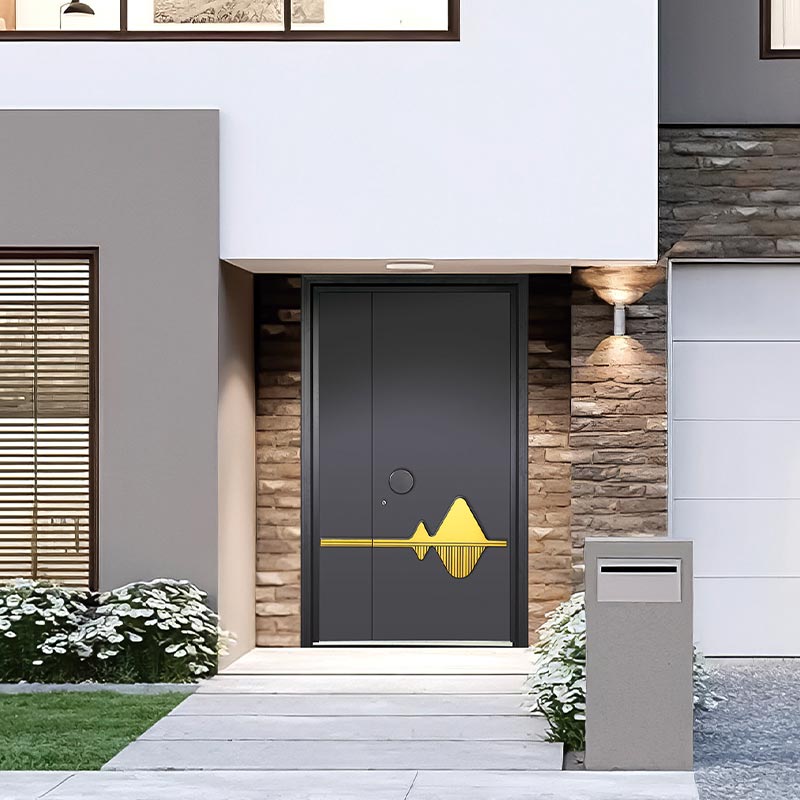
The surface geometry of a cast aluminum panel is structural — it’s in the metal, not on top of it. Deep recesses and raised borders are the same material as the panel substrate, at greater thickness at the relief points, which adds rigidity alongside visual weight. Traditional European panel layouts, contemporary geometric patterns, and bespoke designs are all achievable within the same casting process; the mold geometry is what changes, not the production method.
Thermally broken frame — up to 70% lower heat transfer
The polyamide insert (PA66-GF25) runs continuously between inner and outer aluminum profiles. Polyamide conducts heat at roughly one-thousandth the rate of aluminum, so the thermal bridge through the frame is broken at the material level, not managed by insulation added afterward. Interior frame surface temperatures stay closer to room temperature; condensation risk drops; the whole entrance wall assembly performs better thermally as a result.
Weatherproof to exterior standard
Multi-layer EPDM gaskets on all four panel edges. Outer gasket deflects wind-driven rain; inner gasket seals the air gap. Concealed threshold drainage channel at the base handles rain run-off without surface pipework. The combination is rated for exposed coastal and high-wind locations, not just sheltered residential positions.
Acoustic performance up to Rw 38 dB
The solid mass of the cast panel plus the perimeter gasket sealing achieves meaningful acoustic attenuation — relevant for road-facing villa entrances and urban properties where ambient noise is a daily condition, not an occasional event.
No rust, no recoating, no maintenance cycle
Cast aluminum doesn’t corrode. The chromate conversion primer under the powder coat provides adhesion to the aluminum substrate that direct-to-metal paint doesn’t achieve — the coating doesn’t peel at the panel edges or around fastener points under thermal cycling. Fifteen-plus years exterior stability without remediation.
Full customization — panel design, size, color, hardware
Width up to 1.2 m per leaf, height up to 3.0 m. Single or double leaf. RAL color or wood-grain transfer. Handle, lock cylinder, and hinge finish specified per project. Bespoke panel mold tooling available for custom relief patterns.
Cast vs Extruded Aluminum — Why the Process Difference Shows
Most aluminum doors on the market are extruded. Aluminum is pushed through a die to produce a uniform linear profile, which is then cut, mitered, and assembled into a frame. The panel infill — glass, flat sheet, pressed pattern — is a separate component. The aluminum itself is structurally flat; the visual character of the door comes from what’s put inside the frame.
Cast aluminum starts differently. Molten metal goes into a mold. When it solidifies, the panel carries the exact three-dimensional form of the mold surface as a continuous, structurally integral part of the panel — not a separate insert, not a surface treatment applied afterward. The material is thicker at the relief points, which is part of why cast panels feel substantial in a way that pressed sheet or extruded profile assembly doesn’t.
For a villa entrance, that distinction matters in practice. The door is the detail that architects, interior designers, and property owners evaluate at close range and from a distance simultaneously. A cast aluminum panel reads as the same visual category as cast iron or bronze — the materials historically used for luxury entrance doors — without their weight, their corrosion vulnerability, or the maintenance involvement they require. A JHR cast aluminum panel weighs approximately 40% less than an equivalent cast iron panel at the same visual mass, which keeps it within the load range of standard door hardware and makes it manageable for two installers without mechanical lifting on most sizes.
Surface Finish: Powder Coat and Wood-Grain Transfer
The finish decision on a cast aluminum door affects both how it looks from the street and how it holds up over fifteen years of UV and weather exposure.
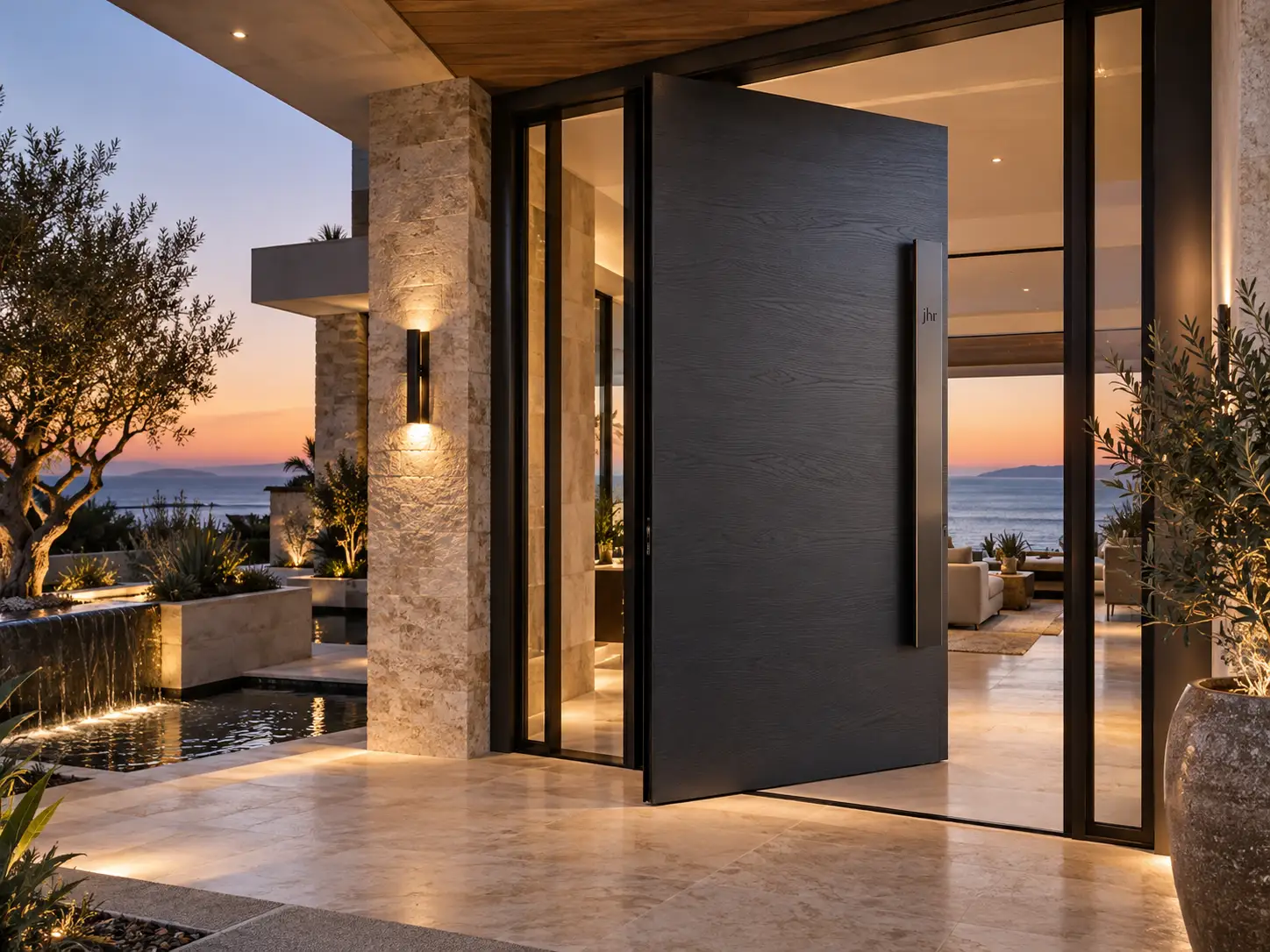
Powder coating is the standard exterior aluminum finish, and it performs well on cast panels when the substrate preparation is correct. The cast surface is cleaned, treated with a chromate conversion primer, then electrostatically coated and oven-cured. The result is a continuous, pore-free film that bonds to the aluminum at a molecular level. UV fading, chalking, surface abrasion under normal outdoor conditions — the coating handles these for fifteen years or more without recoating. The full RAL palette is available, along with metallic, textured, and smooth gloss options.
Wood-grain transfer is specified when the project needs the visual warmth of timber without timber’s maintenance requirements. A photographic wood-grain image is transferred to the powder-coated surface under heat and pressure using a thermal sublimation process. The result looks like timber — convincingly, including grain pattern and surface texture — while performing like aluminum. The finish is applied to a powder-coated base, so the UV and weathering resistance comes from the coating underneath, not from the grain layer itself. Walnut, oak, mahogany, and teak patterns are standard; custom patterns are available for projects where the grain needs to match existing interior timber.
Product Specifications
Technical Item
|
Specifications & Details
|
| Product Type |
Cast Aluminum Entry Door — single leaf or double leaf configuration |
| Panel Fabrication |
Gravity-cast aluminum panel with three-dimensional relief surface; panel thickness 40–60 mm |
| Frame Material |
Thermally broken 6063-T5 aluminum alloy with PA66-GF25 polyamide thermal break |
| Frame Finish |
Chromate primer + powder topcoat — standard or custom RAL colors |
| Panel Finish Options |
Powder coat (full RAL palette, metallic, textured) or wood-grain thermal transfer (walnut, oak, mahogany, teak, custom) |
| Door Width |
Up to 1.2 m per leaf; double leaf up to 2.4 m total (customizable) |
| Door Height |
2.1 m to 3.0 m (customizable to opening requirement) |
| Panel Design Options |
Traditional European relief, contemporary geometric, custom bespoke design (mold tooling per project) |
| Thermal Break |
Continuous PA66-GF25 polyamide insert — reduces frame heat transfer by up to 70% vs standard aluminum frame |
| Weatherproofing |
Multi-layer EPDM gasket on all four panel edges; concealed threshold drainage channel |
| Acoustic Performance |
Up to Rw 38 dB with solid cast panel and full gasket sealing |
| Locking System |
Multi-point locking — hook bolts top and bottom plus central deadbolt; smart lock cylinder integration available |
| Hinge System |
3D adjustable heavy-duty aluminum or stainless steel hinges; concealed hinge option available |
| UV & Weather Resistance |
Powder coat and wood-grain transfer finish rated for 15+ years exterior stability without recoating |
| Application |
Luxury villa entrances, private residential properties, boutique hotels, gated community clubhouses, high-end commercial lobbies |
| Customization |
Panel design, door width and height, leaf configuration, frame RAL color, panel finish, hardware finish, lock system, smart lock |
Installation and Long-Term Care
The rough opening is sized to the door frame dimensions plus fixing clearance — JHR provides the exact opening specification with the order drawings. The frame is set, leveled, and anchored to the masonry or concrete surround using the frame anchors supplied. The cast panel hangs on 3D-adjustable hinges, which allow height, lateral, and compression adjustment after hanging to close the perimeter gaskets evenly around all four edges.
Panel weight is the variable that determines how the installation goes. Cast aluminum panels typically run 60 to 120 kg per leaf depending on size and relief depth. Two installers manage most sizes; larger panels benefit from a mechanical lifting aid for the hanging step. JHR supplies full installation drawings with every order and provides video call support during fitting and hardware adjustment for first-time installations.
Ongoing care is straightforward. The aluminum frame and cast panel need no repainting or re-sealing. Wash the surface periodically with mild detergent and water — atmospheric deposit buildup is the main thing to stay ahead of on a textured relief surface. Lubricate the multi-point lock mechanism annually with graphite or PTFE lubricant, not oil-based products that attract dust inside the lock barrel. Inspect the EPDM gaskets every two to three years; if compression set is visible across the perimeter, replace them. It’s a two-hour task that doesn’t require dismounting the door. Replacement gaskets, lock components, and hardware for all standard configurations are stocked and ship within 48 hours.
Door width, height, leaf configuration, panel design preference, finish, and hardware specification are enough to generate a quote. One working day for specification sheet and pricing.