Nullam dignissim, ante scelerisque the is euismod fermentum odio sem semper the is erat, a feugiat leo urna eget eros. Duis Aenean a imperdiet risus.
Nullam dignissim, ante scelerisque the is euismod fermentum odio sem semper the is erat, a feugiat leo urna eget eros. Duis Aenean a imperdiet risus.

 author
An aluminum gate often fits outdoor exposure, automated movement, and defined finish schedules. Wood serves briefs based on natural grain and timber detailing. The choice also depends on climate, movement, wind, maintenance capacity, and the complete gate structure.
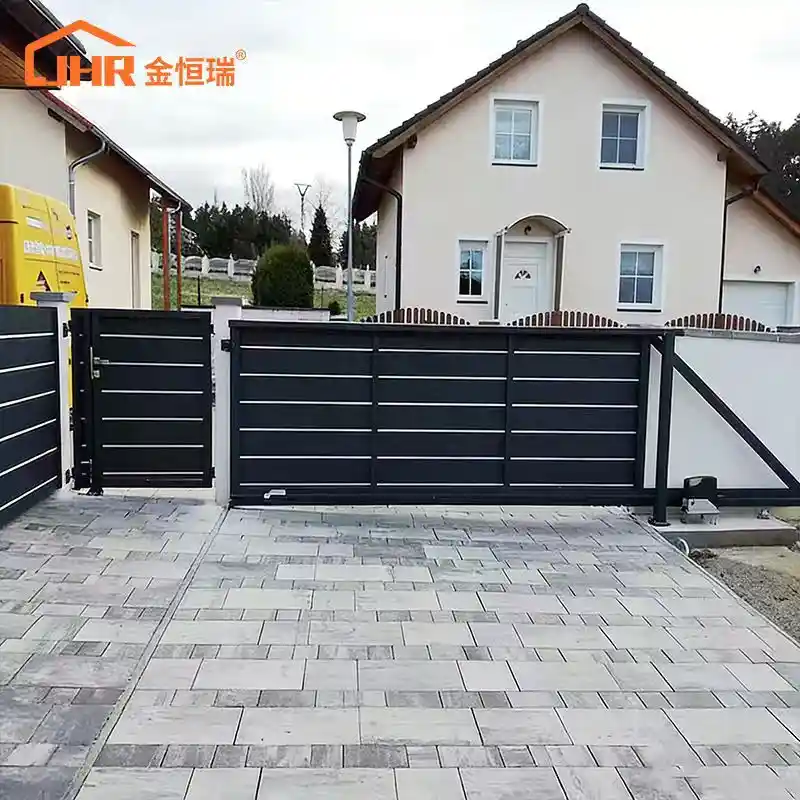
Use the complete opening as the unit of comparison. The leaf, hardware, posts, foundation, and operator work as one system.
| Decision factor | Aluminum gate | Wood gate | Project check |
| Outdoor exposure | Aluminum forms a natural oxide layer and resists rust | Timber response depends on species, coating, moisture, and detailing | Climate, salt, rain, chemicals, and drainage |
| Surface finish | Powder coating, RAL colours, matte, gloss, texture, or wood-look effects | Stain, paint, or another timber finish selected by specification | Finish system and care instructions |
| Moving mass | Lower mass can reduce loads on hinges, rollers, posts, foundation, and motor | Mass depends on timber species, moisture, frame, and infill | Gate weight and hardware rating |
| Design | Slats, louvers, vertical pickets, laser-cut panels, and privacy infill | Natural grain and timber-specific detailing | Pattern, privacy, wind area, and attachment |
| Automation | Manual or electric configurations with project-selected controls | Operator selection depends on the complete leaf and hardware | Opening, speed, cycles, slope, wind, and safety |
Aluminum develops a protective oxide layer in air. JHR combines an aluminum alloy frame with a powder-coated surface for outdoor gates.
Site exposure needs a written review because salt, chemicals, trapped water, and cleaning access affect coating decisions. For wood, ask the supplier to identify the species, surface treatment, joints, and drainage. Available data provides no universal wood-gate life span or maintenance interval.
JHR maintenance guidance covers washing with soap and water, surface damage, loose bolts, and worn components. Automated installations add the motor, limits, photocells, safety edges, warning light, and manual release to the inspection.
Wood care follows the selected timber and finish. Ask the supplier to state cleaning, recoating, moisture control, and repair responsibilities. Aluminum hardware and automation also require service.
Gate weight passes through hinges or rollers into the posts and foundation. A lower moving mass can reduce those loads. Every component still needs a suitable rating.
JHR uses aluminum for swing, sliding, folding, cantilever, pedestrian, farm, and industrial gates. Operator selection follows leaf weight, opening, speed, wind, slope, temperature, and daily cycles. Available controls and safety options include RF remote, RFID, keypad, loop detector, BMS integration, photocells, safety edges, warning lights, manual release, and obstruction reversal. Compatibility remains project-specific.
Aluminum fits briefs that combine outdoor corrosion management, controlled appearance, and powered movement. Gate type and civil work remain part of the decision.
The natural oxide layer supports aluminum’s resistance to rust. Powder coating adds the specified colour and another protective surface.
For a coastal or industrial site, record salt, airborne particles, chemicals, standing water, drainage, and cleaning access. Use those conditions to review fasteners, coating, and maintenance instructions.
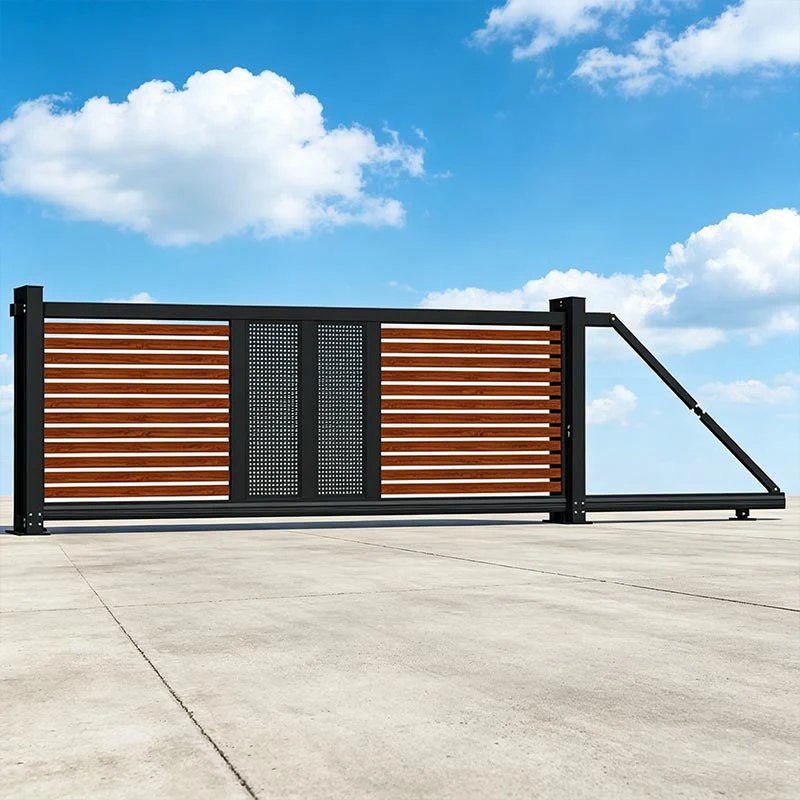
An aluminum cantilever gate travels above the driveway on roller carriages fixed beside the opening. The clear passage contains no ground rail to collect mud, gravel, leaves, snow, or standing water. The design still needs run-back, support posts, a foundation, a receiver, and carriage alignment.
Review aluminum cantilever gate systems when the site calls for lateral movement and an automated entrance.
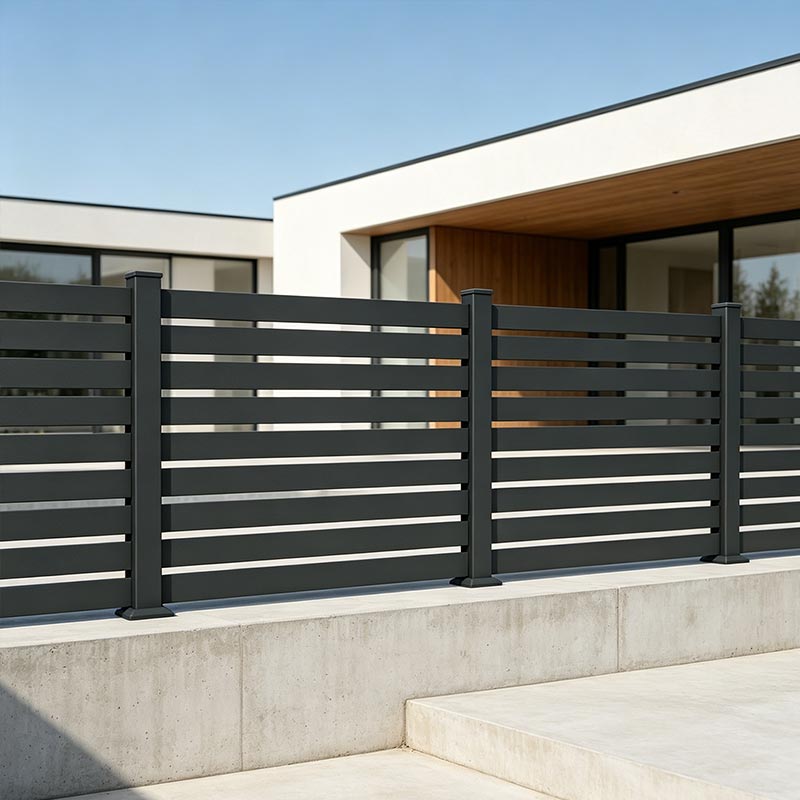
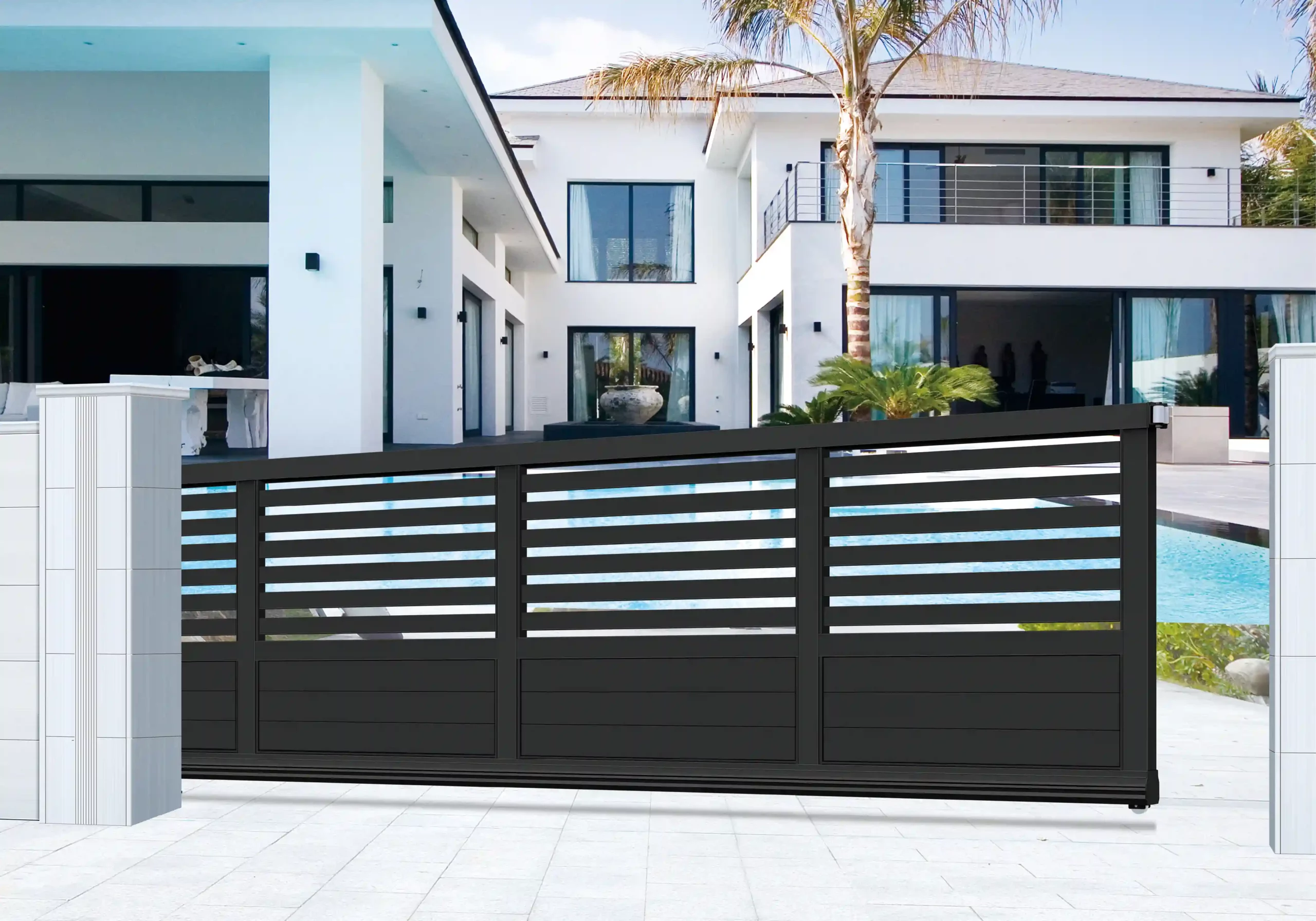
JHR offers slats, louvres, vertical pickets, laser-cut panels, and privacy infill. Finish choices include RAL colours, matte, gloss, texture, wood-look, and two-tone effects. The gate can follow an architectural elevation while retaining an aluminum base.
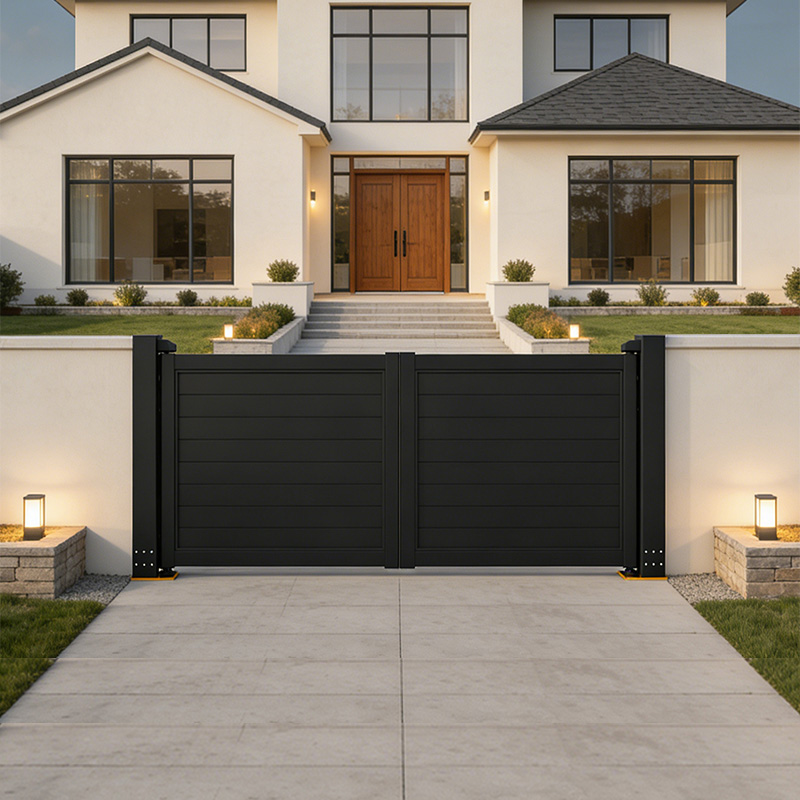
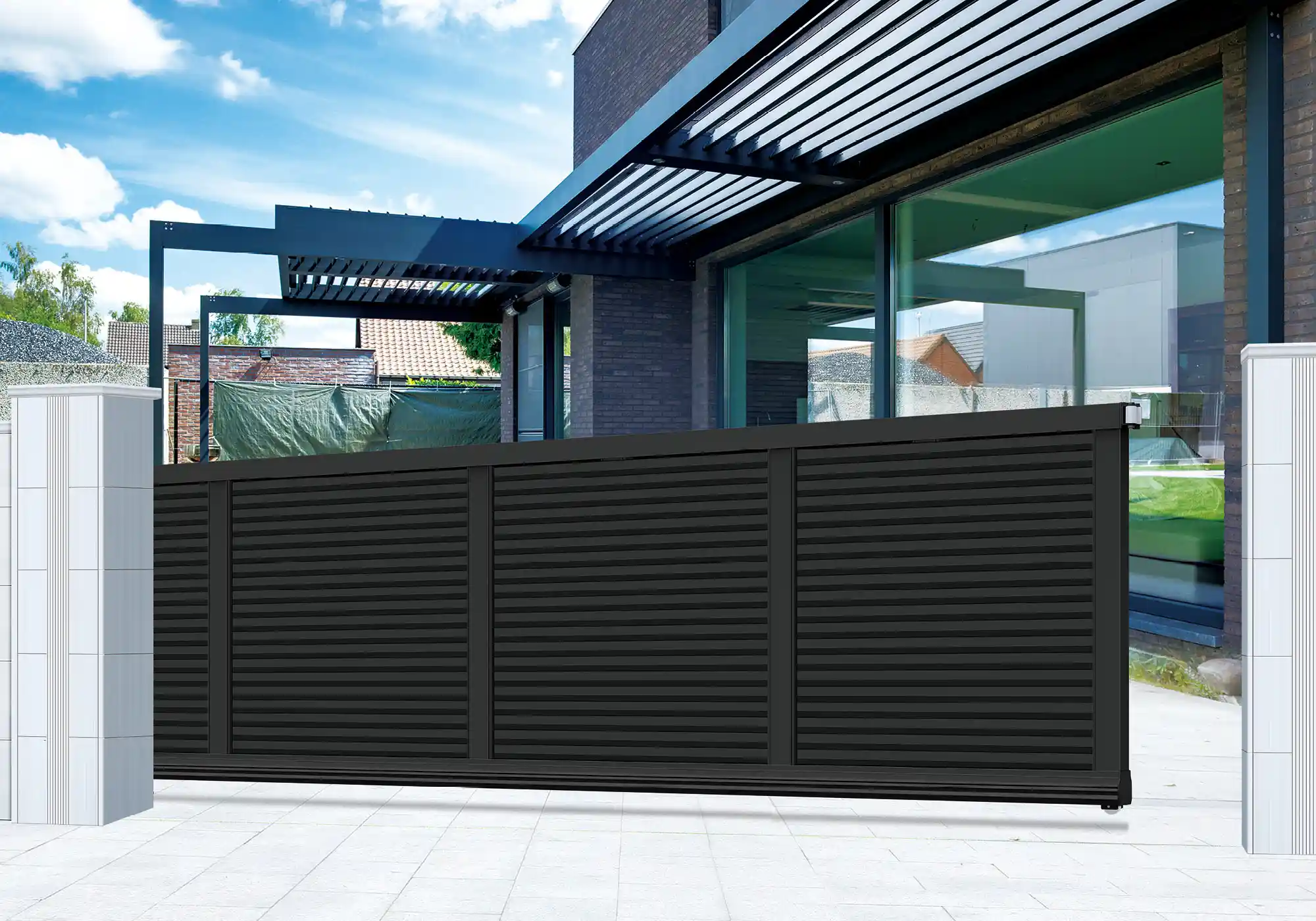
Privacy changes the structural brief. A closed infill creates more wind-facing area, so the frame, posts, foundation, carriages, and operator need a combined review. The aluminum fence and gate designs page shows related design directions.
Wood fits designs based on real grain, timber joinery, or existing woodwork. Specify the timber, finish, moisture exposure, drainage, and maintenance owner.
A timber gate provides the character of the selected wood. Aluminum can carry a wood-look effect, slats, louvers, decorative cuts, or privacy panels. Similar appearances still represent different material choices.
Set the material requirement before requesting prices so suppliers quote the same visual target and state their surface-care assumptions.
Wood-gate care follows its species, finish, and exposure. Request instructions for cleaning, coating renewal, moisture checks, hardware adjustment, and repair. Assign responsibility in the handover documents.
Profile size, wall thickness, frame geometry, connections, hardware, posts, foundation, wind, and impact risk shape an aluminum gate. Large privacy panels add mass and wind-facing area.
A cantilever layout uses side run-back to store the leaf and counterbalance. Installation covers carriage alignment, receiver adjustment, motor setup, and safety testing. Review industrial gate configurations with opening and duty data for a wide or high-cycle entrance.
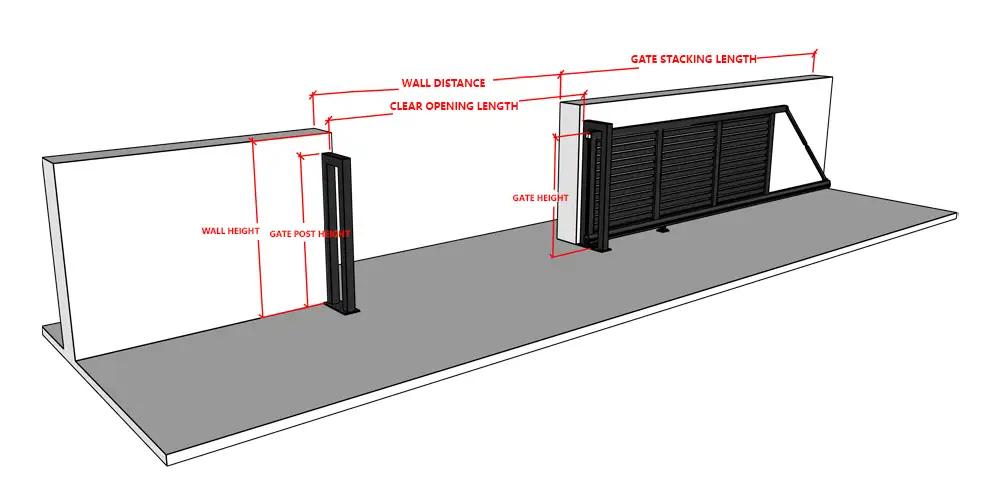
Issue the same technical brief to each supplier. This ties the comparison to one opening, operating condition, and delivery scope.
Record the opening, height, slope, run-back, receiving area, drainage, photographs, wind exposure, destination, and daily cycles. State the intended movement: swing, sliding, cantilever, folding, or pedestrian.
Define the pattern, privacy level, colour, and surface system. Require the frame or profile, gate weight, hinges or carriages, posts, receiver, foundation, locks, and fasteners in the response. Written assumptions expose structural differences between similar-looking quotations.
State motor duty, speed, controls, and power conditions. List the required manual release, photocells, safety edges, warning light, and obstruction reversal. Add installation drawings, maintenance instructions, inspection records, and spare-parts information to the document schedule.
Include warranty terms and certification requirements. Compare them after suppliers confirm equivalent scope and product conditions.
Choose aluminum for corrosion-resistant material, lower moving mass, configurable finishes, and manual or electric operation. Wood suits designs driven by real timber appearance and a defined care plan. Final approval should cover the structure, wind exposure, automation, and maintenance responsibility.
Foshan JHR Smart Tech Co., Ltd. supplies aluminum cantilever, sliding, swing, folding, pedestrian, farm, industrial, and fence systems. Available choices include powder-coated RAL finishes, wood-look effects, slats, louvres, decorative panels, privacy infill, and project-selected controls.
Send the opening, height, photographs, slope, run-back, infill, wind, cycles, destination, and document requirements. JHR can then define the gate type, configuration, and quotation boundaries. For a hinged travel path, review aluminum swing gate options.
Q1: Are Aluminum Gates Better Than Wood?
A: Aluminum suits outdoor gates that need corrosion resistance, a controlled finish, lower moving mass, or electric operation. Wood serves briefs based on real grain and timber detailing. Check site exposure, movement, wind, structure, and maintenance before approval.
Q2: Which Gate Material Needs More Maintenance?
A: Maintenance depends on the complete gate and surface system. Aluminum needs washing plus checks of the coating, fasteners, hardware, motor, and safety devices. For wood, request a care schedule for the specified timber and finish.
Q3: Is an Aluminum Gate Suitable for a Coastal Property?
A: Aluminum can be specified for coastal sites because its natural oxide layer supports corrosion resistance. Give the supplier the salt exposure, wind, drainage, standing-water risks, fasteners, and cleaning access. These details guide the coating and maintenance recommendation.
Q4: Can an Aluminum Gate Match a Wood-Look Design?
A: Yes. JHR offers wood-look effects, RAL colours, matte, gloss, texture, and two-tone finishes. Confirm the colour, pattern, coating, and infill in the quotation.

Why an Aluminum Luxury Gate Is a Smart Choice for Any Property