Nullam dignissim, ante scelerisque the is euismod fermentum odio sem semper the is erat, a feugiat leo urna eget eros. Duis Aenean a imperdiet risus.
Nullam dignissim, ante scelerisque the is euismod fermentum odio sem semper the is erat, a feugiat leo urna eget eros. Duis Aenean a imperdiet risus.

 author
There is no single service-life figure for every aluminium gate. An aluminum cantilever gate should be assessed through its alloy, coating, support structure, hardware, automation, site exposure, and maintenance plan.
The answer depends on the component and recorded project conditions. The frame, coating, carriages, posts, foundation, motor, controls, and safety devices have different inspection requirements.
JHR confirms structural-grade aluminum alloy, powder-coated finishes, custom dimensions, manual or motorized operation, and applications from villas to industrial and warehouse entrances. Its information does not provide one tested life-expectancy number for every gate. A quotation should state configuration, environmental assumptions, maintenance requirements, and warranty terms.
Aluminum forms a natural oxide layer that supports corrosion resistance for outdoor gate frames. Powder coating adds colour and weather protection, while the mechanical system carries operating loads. Carriages, posts, receiver hardware, foundations, the operator, and safety devices still require separate inspection.
Life expectancy follows the interaction between material, environment, design, and operating demand. The table identifies the project inputs that deserve a written answer.
| Factor | What it affects | What to confirm |
| Alloy and frame design | Corrosion behaviour, mass, and load path | Alloy/profile information and approved drawing |
| Powder coating | Colour, UV exposure, and surface condition | Pretreatment, coating system, RAL colour, and care instructions |
| Infill | Gate mass and wind-facing area | Slat, louvre, decorative-cut, or privacy layout |
| Site environment | Moisture, salt, chemicals, and UV exposure | Coastal, humid, industrial, or sheltered location |
| Operating demand | Motor, carriage, and control wear | Opening, speed, wind, slope, temperature, and daily cycles |
| Installation quality | Alignment and load transfer | Post depth, foundation, carriage position, and travel path |
JHR specifies aluminum alloy construction for its cantilever gate range. The alloy forms an oxide layer that supports resistance to rust and outdoor corrosion, including humid or coastal exposure.
Chemicals, airborne particles, standing water, impact damage, and trapped dirt can affect surface condition and hardware. Record the environment in the RFQ for frame, coating, drainage, and maintenance review.
Powder coating forms the visible finish on the aluminum frame. JHR confirms standard or custom RAL colours, two-tone schemes, and panel designs. The finish schedule should identify colour, coating system, pretreatment, and cleaning method.
The available information does not establish one coating-life figure for every climate. Inspect impact marks, chalking, contamination, peeling, and colour change. Keep a record for cleaning, local repair, or supplier review.
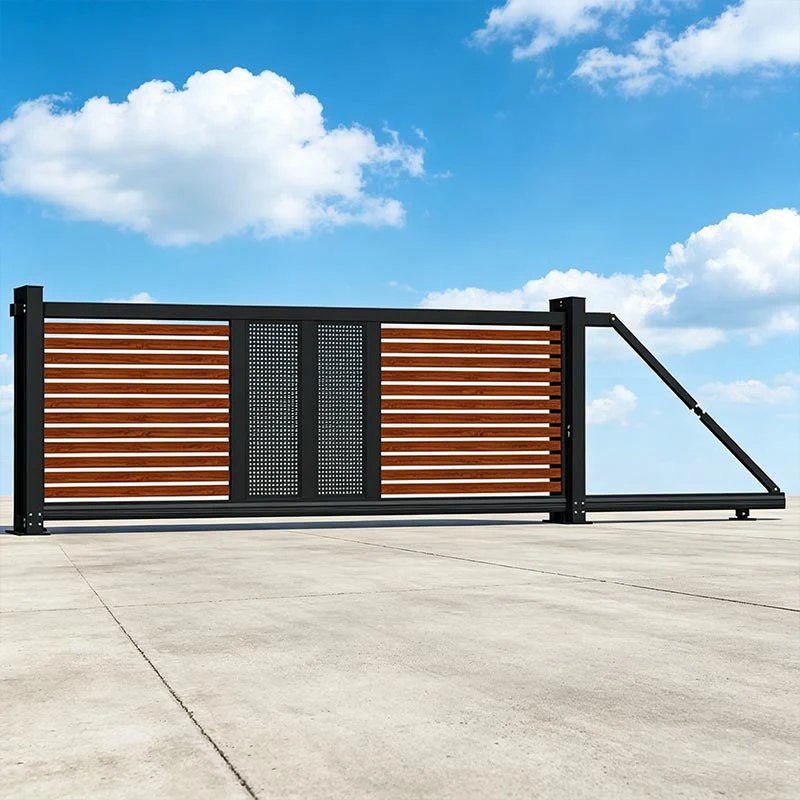
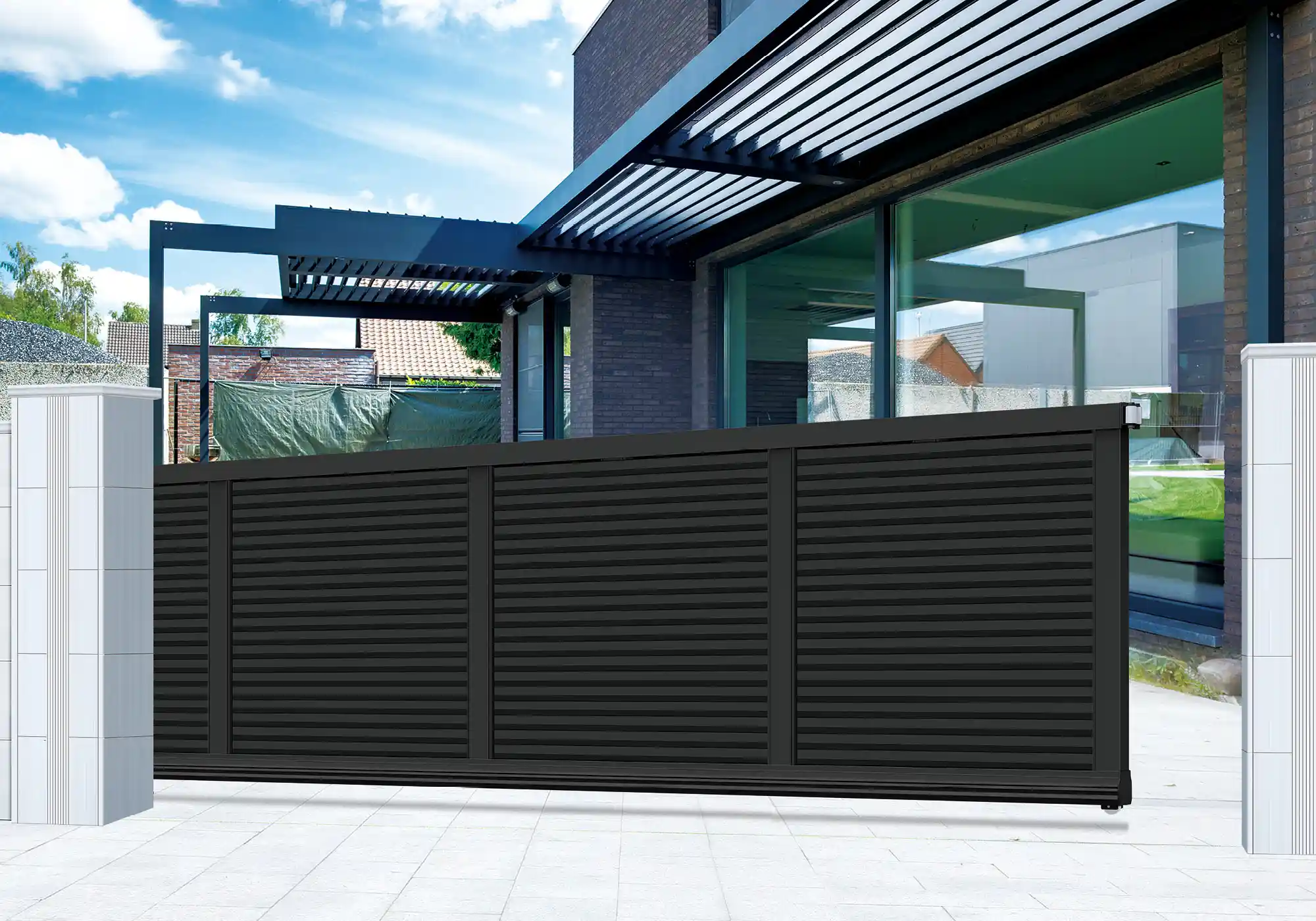
Infill changes appearance and engineering inputs. JHR lists horizontal slats, louvre blades, decorative cut-outs, and solid privacy infill. A closed panel presents more wind-facing area and can add gate mass.
Review the frame, carriages, posts, foundation, receiver, and operator against the selected infill and wind exposure. Ask for gate weight and support assumptions.
An automated gate has a duty profile that a manual gate lacks. JHR’s inputs include leaf weight, opening, speed, wind load, slope, temperature, and daily cycles. These values guide motor, drive, controls, and safety selection.
Confirmed control options include RF remote, RFID, keypad, loop detector, and BMS integration, subject to compatibility. Manual release, photocells, safety edges, warning lights, and obstruction reversal can also be specified. List each device and its inspection responsibility.
Cantilever construction changes the driveway maintenance point. It also concentrates structural loads at the support side, so both effects belong in the service-life review.
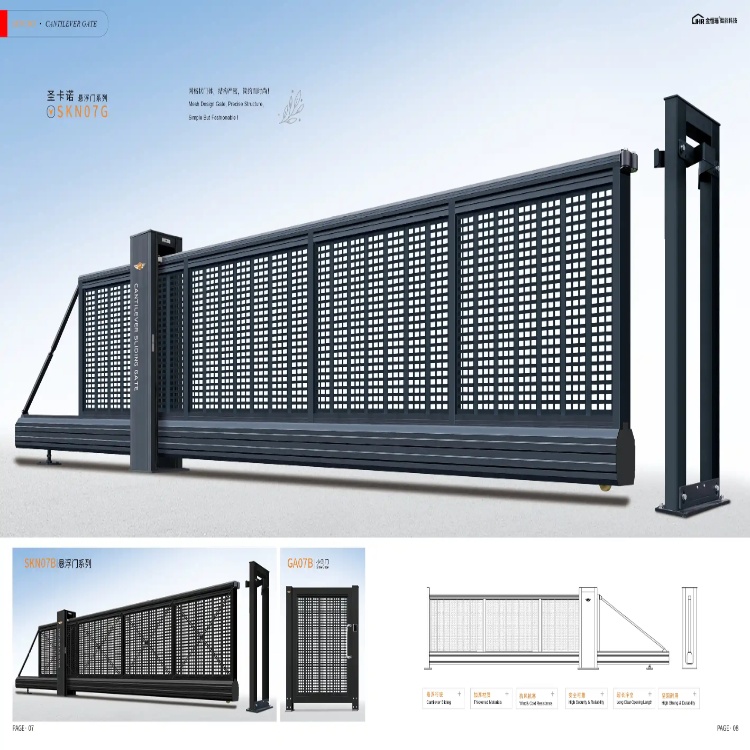
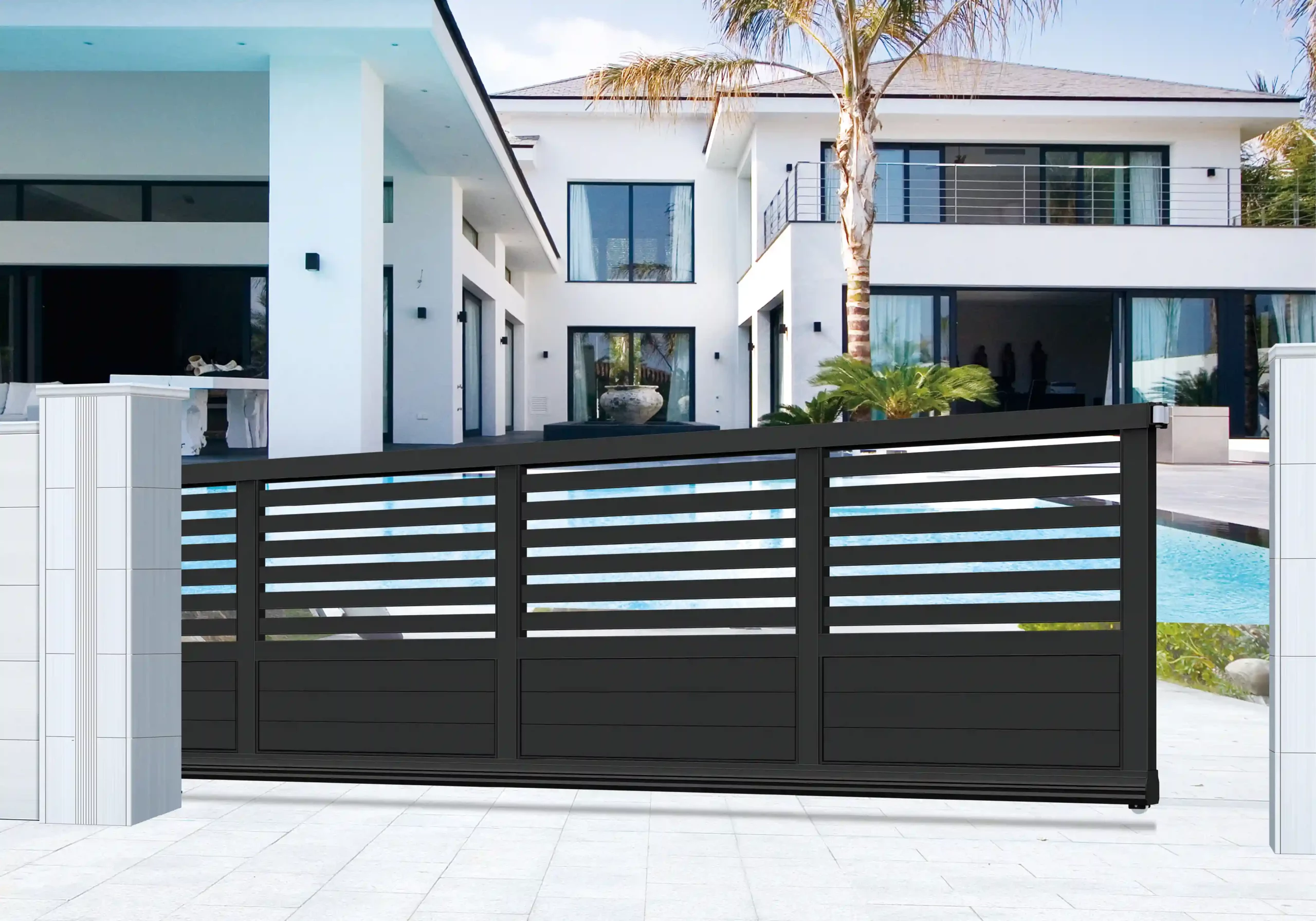
An aluminum cantilever gate moves above the driveway on roller carriages mounted to fixed posts. The opening has no ground track, so mud, gravel, leaves, snow, and standing water do not sit inside a buried rail. This removes one driveway cleaning and alignment task.
The support side remains an engineered structure. Posts, carriage alignment, foundation, receiver, and travel path carry operating loads. Review aluminum sliding gate systems for other lateral layouts.
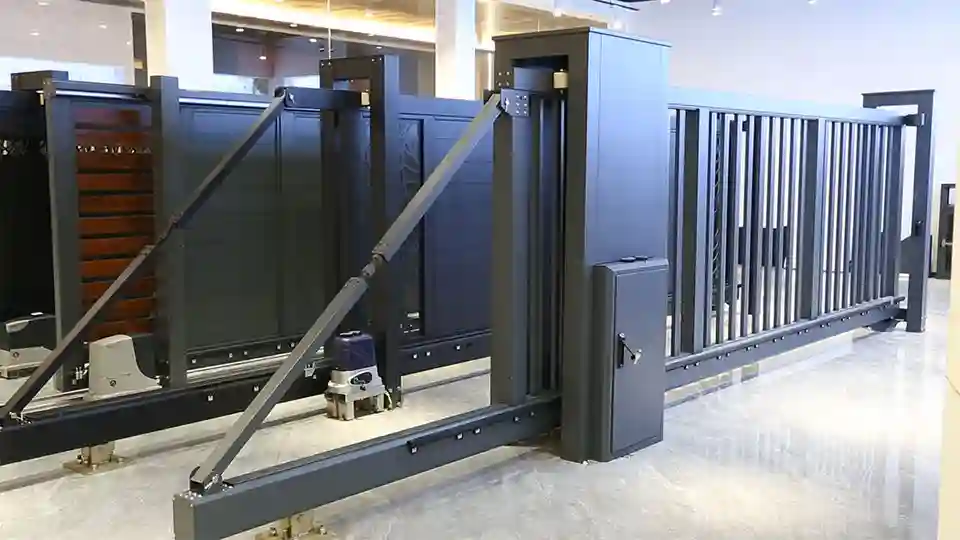
Roller carriages carry the suspended leaf and transfer loads into fixed posts and the foundation. Installation alignment affects movement, clearances, and operator load. The receiver guides the closed position.
Request a drawing showing gate length, carriage spacing, post locations, foundation boundaries, receiver position, and motor location. These details support later inspections.
JHR guidance recommends checking motor noise, loose bolts, component wear, photocell alignment, surface cleaning, and moving hardware.
| Inspection area | Action | Record |
| Frame and coating | Wash with mild soap and water; inspect impact or surface damage | Date, area, condition, and corrective action |
| Carriages and rollers | Check movement, noise, wear, and alignment | Observed issue and service decision |
| Posts and foundation | Review looseness, settlement, cracks, and visible movement | Site photo and engineer/installer note |
| Motor and controls | Listen for unusual noise; check connections and force settings | Test result and technician record |
| Photocells and safety edges | Clean, align, and test the safety response | Pass/fail result and date |
Washing removes dirt and reveals scratches, impact marks, or coating damage. Record coastal and industrial exposure. Use supplier instructions for cleaning agents and repairs.
Rollers, hinges, motors, limits, photocells, safety edges, warning lights, and manual releases each need a defined check. JHR guidance calls for professional annual servicing of automatic systems, including electrical connections and force settings; scope follows the installed equipment.
Ask for a project file covering alloy/profile, gate weight, opening, height, infill, wind basis, coating system, RAL colour, carriages, posts, foundation, receiver, operator, controls, safety devices, inspection records, spare parts, maintenance instructions, warranty terms, photographs, and destination market.
JHR’s Industrial Heavy Duty Cantilever Gate lists a clear span of up to 16 m for that category. Confirm model, drawing scope, and site conditions before using the figure. Industrial gate applications provide a reference.
An aluminum cantilever gate supports long-term outdoor use when material, finish, support structure, hardware, automation, environment, and maintenance are specified as one system. Aluminum’s oxide layer supports corrosion resistance, while the cantilever layout keeps the driveway opening free of a ground rail. Service work remains for posts, carriages, foundation, finish, operator, controls, and safety devices.
Foshan JHR Smart Tech Co., Ltd. supplies aluminum cantilever and sliding gates for residential, farm, commercial, industrial, and warehouse entrances. Confirmed options include manual or electric operation, powder-coated RAL finishes, horizontal slats, louvers, decorative cut-outs, and solid privacy infill. Send the opening, height, run-back, photos, infill, wind exposure, daily cycles, destination, and document requirements. JHR can then return a configuration recommendation, drawing basis, and quotation assumptions. Projects that require another movement path can review aluminum swing gate options.
Q1: What Is the Life Expectancy of an Aluminium Gate?
A: No single life-expectancy number applies to every aluminium gate. Review the frame material, coating, hardware, foundation, automation, site exposure, and maintenance record together. JHR’s information does not establish one universal tested figure.
Q2: Does an Aluminum Cantilever Gate Need Regular Maintenance?
A: Yes. The rail-free opening reduces ground-track cleaning, while the carriages, posts, foundation, finish, motor, controls, and safety devices still need inspection. JHR guidance includes checking motor noise, loose bolts, wear, photocell alignment, and cleaning the surface with soap and water.
Q3: Does Powder Coating Determine How Long an Aluminum Gate Lasts?
A: Powder coating affects the gate’s colour and surface condition. It works with the aluminum substrate and should be specified with its pretreatment, coating system, RAL colour, and care instructions. The available information does not set one coating-life number for every climate.
Q4: Are Aluminum Cantilever Gates Suitable for Coastal or Humid Sites?
A: They can be evaluated for coastal and humid sites because aluminum forms a natural oxide layer that supports corrosion resistance. The supplier still needs the exposure, infill, wind, hardware, drainage, and maintenance conditions. Salt, chemicals, impact, and standing water should appear in the project review.
Q5: Does JHR Offer a Fixed Warranty Period for Every Aluminum Gate?
A: A single warranty period should not be assumed for every gate. Product materials contain different warranty references, so the quotation should state the applicable term for the selected model, components, destination, and conditions. Request the warranty document with the technical offer.

Why an Aluminum Luxury Gate Is a Smart Choice for Any Property