Nullam dignissim, ante scelerisque the is euismod fermentum odio sem semper the is erat, a feugiat leo urna eget eros. Duis Aenean a imperdiet risus.
Nullam dignissim, ante scelerisque the is euismod fermentum odio sem semper the is erat, a feugiat leo urna eget eros. Duis Aenean a imperdiet risus.

 author
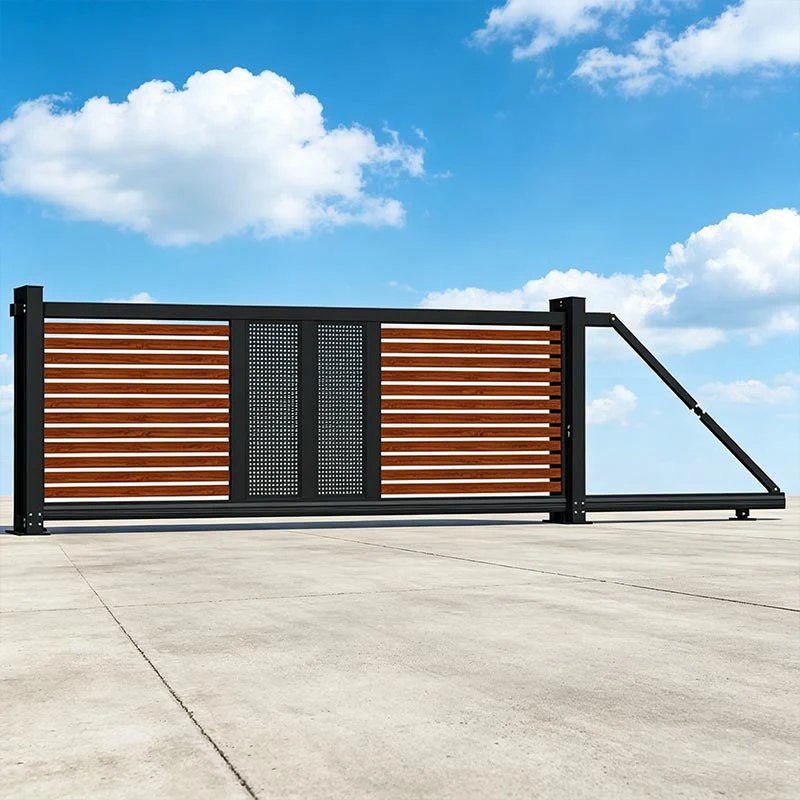
An aluminum cantilever gate is a side-sliding entrance gate supported by fixed posts and roller carriages beside the opening. The gate leaf travels above the driveway, keeping the clear opening free of a ground track. Mud, gravel, standing water, leaves, and vehicle crossings stay separate from the supporting mechanism.
Start with the site. Check the opening, height, side run-back, infill, wind, daily cycles, foundation, automation, and safety devices. Run-back means the area where the full leaf parks when open.
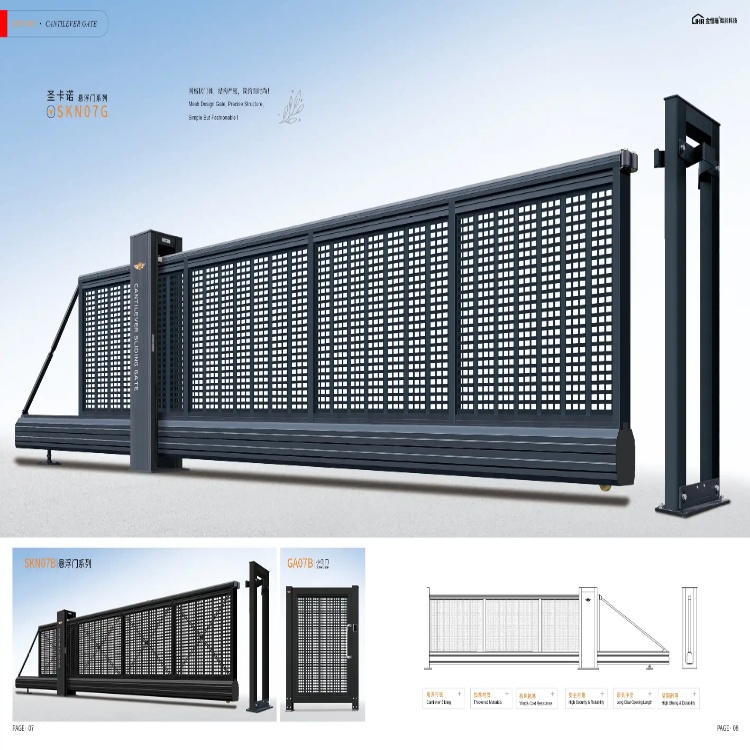
The gate spans the driveway from supports placed on one side. Its moving leaf includes the visible section and a counterbalance section called the tail. Roller carriages carry the assembly during lateral movement.
When the gate closes, its nose travels toward a receiver. The tail remains in the support zone and balances the section spanning the driveway. During opening, the complete leaf slides into the run-back area.
This movement needs a defined path.
Traffic uses the driveway while the operating mechanism remains at the support side. Posts, carriages, frame, receiver, and foundation form one structural system sized for the opening, gate weight, infill, wind, and operating frequency.
| Component | Function | Purchase Check |
| Gate leaf | Closes the entrance and carries the infill | Opening, height, frame, finished weight |
| Counterbalance or tail | Balances the section spanning the opening | Total leaf length and run-back space |
| Support posts | Hold the roller carriages | Post section, spacing, foundation |
| Roller carriages | Support and guide lateral movement | Load capacity, alignment, protection |
| Receiver and stops | Locate the gate in closed and open positions | Hardware material and adjustment |
| Operator and controls | Power and manage access | Motor capacity, voltage, manual release |
| Safety devices | Detect people, vehicles, or obstructions | Photocells, safety edges, warning light |
The approved drawing should identify the components, post locations, foundation details, elevations, and travel limits before site work begins.
The buying case combines a clear driveway opening, an aluminum frame, and lateral movement. Performance depends on the completed assembly and site design.
The vehicle opening remains free of a ground rail. Mud, gravel, leaves, bedding, and standing water stay separate from the carriages. Heavy vehicles cross a clear surface; track hardware remains at the support side.
This layout suits farms, warehouses, commercial entrances, and driveways with active drainage. Buyers comparing aluminum sliding gate systems should confirm whether the site favors cantilever or tracked movement.
JHR cantilever gates use structural aluminum alloy frames with powder-coated finishes. Aluminum forms a protective surface oxide; the coating provides color and an additional outdoor barrier. Record pretreatment, coating, film thickness, RAL color, texture, and care in the finish schedule.
Infill options include slats, louvers, decorative cutouts, and privacy panels. Solid and semi-solid panels increase wind demand, requiring a coordinated review of the frame, carriages, posts, and foundation.
A cantilever gate can use manual or motorized operation. Leaf weight, opening, speed, wind, slope, temperature, and daily cycles determine motor capacity and duty rating, meaning the supported operating frequency.
Controls may include RF remotes, RFID readers, keypads, loop detectors, and building-management interfaces. Define the manual release and test photocells, safety edges, warning lights, and obstruction reversal during commissioning.
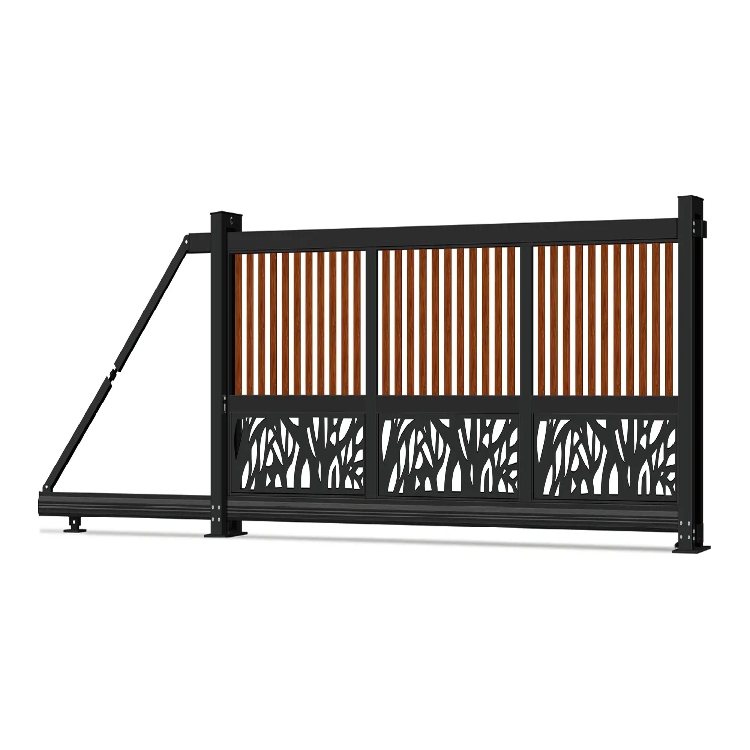
Residential projects often prioritize a rail-free opening, finish, privacy, access controls, and coordination with adjacent fencing.
Commercial properties add traffic flow and daily cycles to the review. Farms prioritize mud, stones, bedding, and vegetation clearance. Industrial entrances require defined clear span, foundations, operator duty, access interfaces, and service access.
The complete leaf and counterbalance must park beside the opening. Limited run-back may direct the project toward a corner, telescopic, folding, or swing layout.
Begin with a site survey and one controlled set of dimensions. Then match the gate’s appearance to a workable opening and movement path.
Measure the clear opening and usable side space. Record walls, landscaping, utilities, slopes, and access routes near the travel zone. The project drawing should show total leaf length and counterbalance dimensions.
Complete this check before ordering posts or pouring concrete. Send photos, a plan view, opening, height, slope, and run-back measurement for layout screening.
Select infill by visibility, privacy, architecture, and wind exposure. Wind force passes through the frame, carriages, posts, and foundation.
Request a design basis covering frame geometry, profile thickness, support spacing, finished weight, wind, and impact risk. JHR uses a 2.0-3.0 mm structural-profile range as an RFQ reference across gate types and applications; each gate needs an approved thickness.
The support side carries gate weight and operating forces. Approve post and foundation drawings before excavation. Record finished-grade elevations across the closed position and travel path.
Route water away from the foundation, motor, conduits, and access controls. Maintenance records should capture alignment changes, unusual noise, and slow movement.
State cycles per day and peak traffic periods. Confirm voltage, controls, speed, manual release, access devices, and integration so the motor can be matched to the gate.
Request a commissioning record for photocells, safety edges, warning lights, manual release, and obstruction reversal. It provides a service baseline.
| Gate Type | Movement and Site Requirement | Main Purchase Check |
| Cantilever sliding | Slides sideways; clear opening has no ground rail | Run-back, counterbalance, carriages, posts, foundation |
| Tracked sliding | Slides sideways on a rail across stable paving | Track alignment, drainage, debris, rollers, run-back |
| Swing | Rotates inward or outward on hinges | Swing arc, slope, leaf width, hinges, wind |
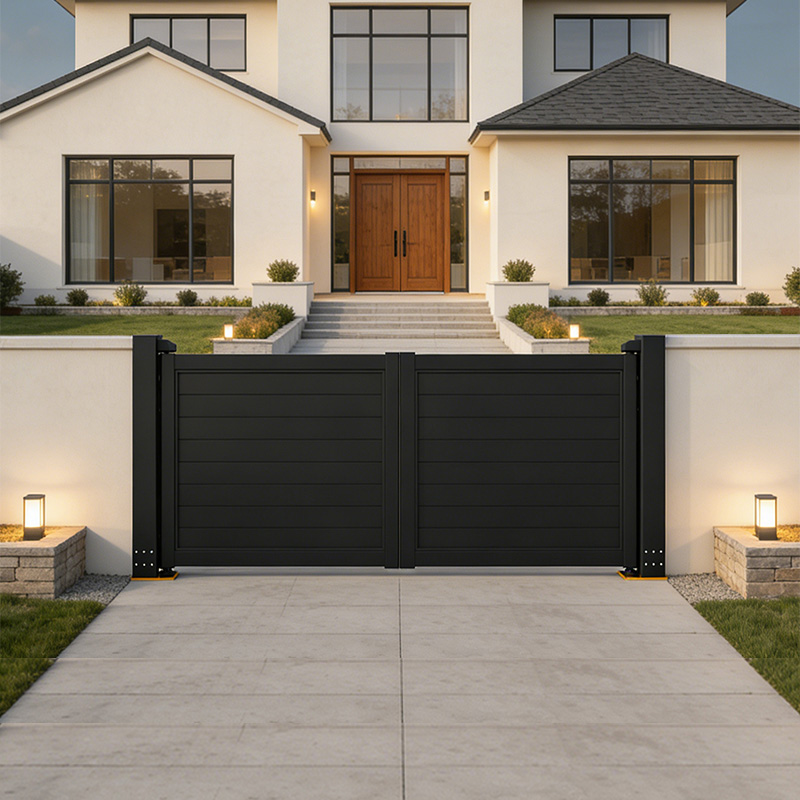
A cantilever gate needs side storage and provides a rail-free opening. A tracked slider places rail hardware across the entrance. Aluminum swing gate options use an arc and need suitable clearance and grade.
Compare each option against the same opening, height, infill, wind, traffic, operator scope, posts, and foundation.
A request for quotation, or RFQ, establishes one basis for pricing and approval. Submit the opening, height, run-back, photos, slope, grade, infill, color, wind, cycles, automation, safety, destination, and certification requirements.
Request the proposed gate type, frame, weight, carriages, posts, foundation scope, operator, controls, safety equipment, coating, drawings, packaging, warranty, spares, support, shipment terms, and lead time.
The quotation should assign supplier items, installer work, and conditions requiring final engineering approval.
An aluminum cantilever gate fits projects with sufficient run-back, an engineered support zone, and a requirement for lateral movement across a rail-free opening. Final approval covers the leaf, infill, wind, cycles, foundation, operator, controls, and safety devices.
JHR project support: Foshan JHR Smart Tech Co., Ltd. supplies custom aluminum cantilever, sliding, swing, pedestrian, bi-folding, and industrial gates with drawings and installation guidance. Projects with large openings or frequent traffic can review industrial gate applications during gate-type selection.
Send the opening, height, run-back, photos, slope, infill, wind, cycles, automation, safety, destination, and certification requirements. The team can return a gate recommendation, configuration review, drawing scope, and quotation basis.
Q1: Does an Aluminum Cantilever Gate Need a Ground Track?
A: No. Roller carriages on fixed posts support the leaf, leaving the driveway free of a ground rail. The posts and foundation carry the structural and operating loads.
Q2: How Much Side Space Does a Cantilever Gate Need?
A: The side area must store the complete leaf and counterbalance. Required length varies with the opening, frame, hardware, and support layout. Confirm total leaf and run-back dimensions on the drawing.
Q3: Can an Aluminum Cantilever Gate Be Automated?
A: Yes. Leaf weight, opening, speed, wind, slope, temperature, and daily cycles govern motor selection. Specify voltage, controls, manual release, access devices, and safety equipment before approval.
Q4: Can a Cantilever Gate Work Across an Uneven Driveway?
A: The opening remains free of a ground track, keeping the operating rail away from uneven paving and debris. Posts, carriages, foundation, alignment, clearance, and travel path still require an elevation review.
Q5: How Much Does an Aluminum Cantilever Gate Cost?
A: Pricing requires a project-specific quotation. Opening, height, total length, infill, finish, wind, foundation scope, automation, safety, destination, and certification requirements define the configuration.