Nullam dignissim, ante scelerisque the is euismod fermentum odio sem semper the is erat, a feugiat leo urna eget eros. Duis Aenean a imperdiet risus.
Nullam dignissim, ante scelerisque the is euismod fermentum odio sem semper the is erat, a feugiat leo urna eget eros. Duis Aenean a imperdiet risus.

 author
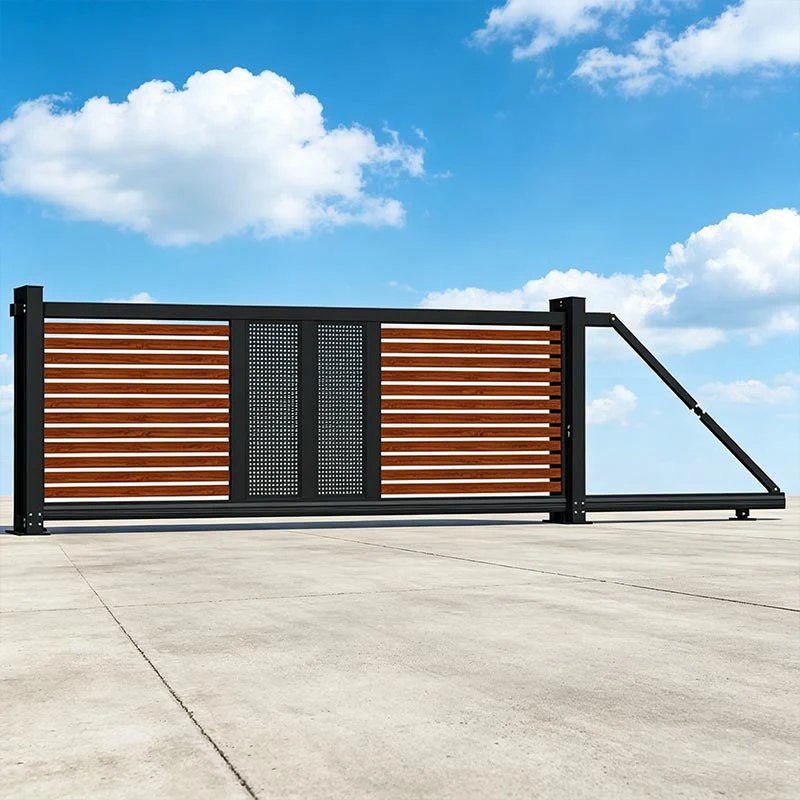
Short answer: yes — and for a lot of good reasons. If you need a gate that won’t rust outdoors, isn’t a pain to move, looks sharp, and works with automation, aluminium’s a solid bet. And if you really want to see what it can do, check out the cantilever sliding gate — no ground track, floats over just about any surface, installs fast. That said, the right choice still comes down to your opening size, gate style, wind exposure, daily cycles.
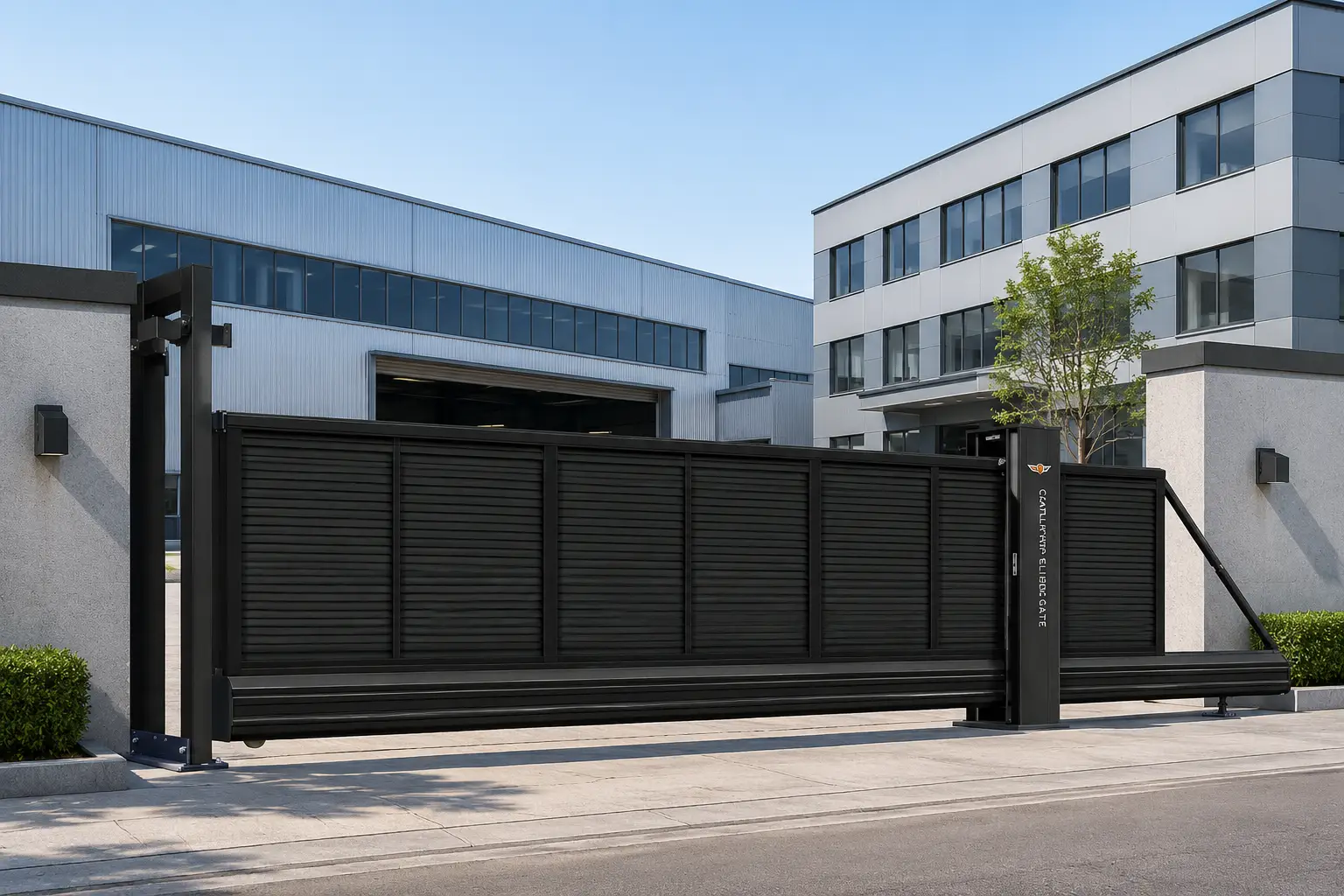
Aluminum contributes three useful properties to a gate system: a protective surface oxide, relatively low mass, and compatibility with architectural finishes.
Aluminum forms a thin oxide layer at its surface. Outdoor powder coating adds color, UV resistance, and another weather barrier.
Coastal projects require a written finish specification. It should identify the alloy, pretreatment, powder system, film thickness, hardware, and cleaning interval. Salt deposits collect around joints, fasteners, and sheltered surfaces. Scheduled washing forms part of the maintenance plan.
A lighter leaf places less static and acceleration load on hinges, roller carriages, racks, motors, posts, and foundations.
Motor selection follows the finished gate configuration. The supplier needs the leaf weight, opening width, speed, wind load, slope, daily cycles, and local temperature. These inputs determine operator capacity. They also define the duty rating, meaning the frequency and volume of cycles the equipment can handle.
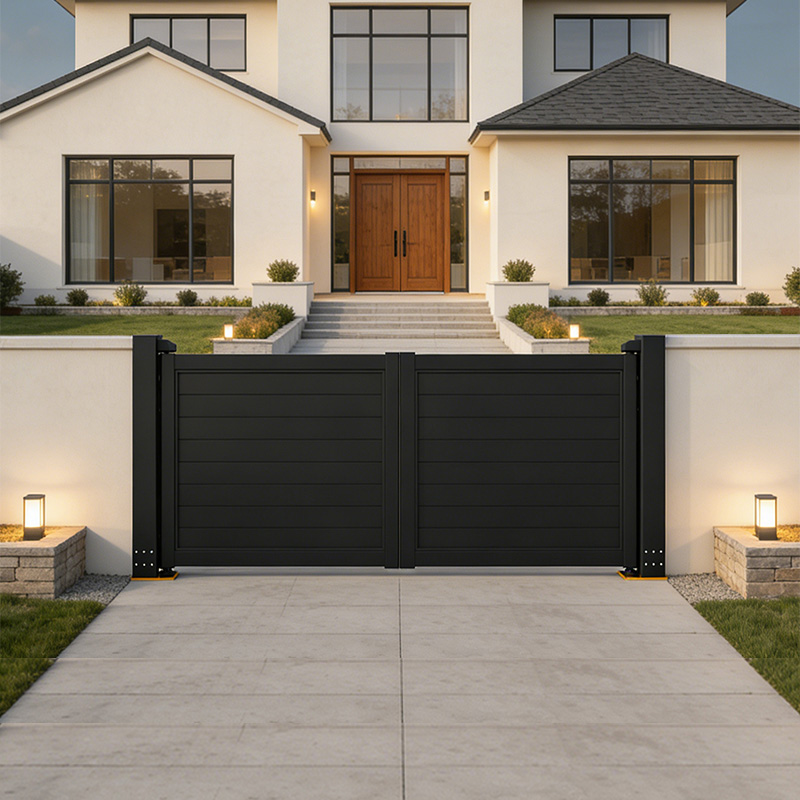
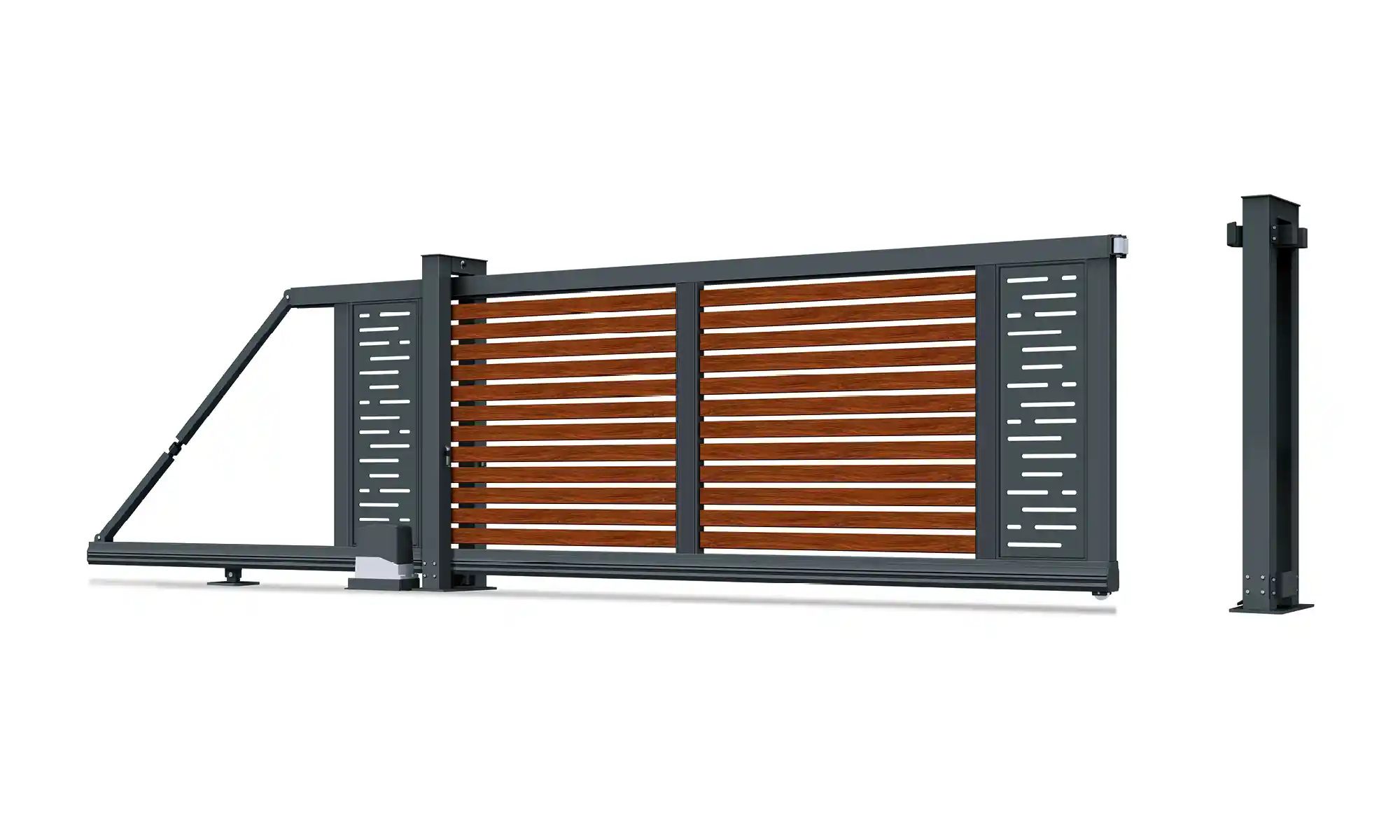
An aluminum frame can carry horizontal slats, louver blades, vertical pickets, laser-cut panels, or solid privacy infill. Powder-coated finishes can follow standard or custom colors in the RAL color system, with matte, gloss, textured, or wood-effect surfaces. These choices are available across multiple aluminum swing gate options.
Panel choice affects privacy and wind load.
Gate performance comes from the full assembly. Alloy and temper, profile dimensions, wall thickness, frame geometry, weld quality, hardware, posts, and foundations work together under the site load.
JHR specifies structural profile thicknesses of 2.0 to 3.0 mm, depending on gate type and application. Use that range as a request for quotation (RFQ) reference for the applicable JHR product. Each gate requires its own approved thickness. The dimension should reflect the opening, height, infill, wind, support spacing, impact risk, and operating frequency.
Large openings may need deeper sections, reinforcement, different carriage spacing, or heavier posts.
Solid privacy panels create higher wind loads than open slats or pickets. The force transfers through the frame into hinges or roller carriages, then into posts and concrete foundations. A tall, solid gate on an exposed driveway requires a wind-load basis before fabrication. The structural calculation should govern the frame section, supports, and foundation.
Provide the site location, opening size, height, infill ratio, and expected wind exposure for structural review.
Steel provides high rigidity and impact resistance for security and vehicle-contact risks. Aluminum provides lower moving mass and corrosion resistance. The security level, expected impact, clear opening, and cycle count determine the material and structural section.
Daily cycles affect bearings, hinges, motors, latches, and safety devices. Large openings and frequent vehicle access may fit specific industrial gate applications. Ask for the assembly’s duty rating.
The movement pattern controls space, foundation, drainage, and automation requirements. Use the site layout to select the gate type.
| Gate Type | Suitable Site | Main Check |
| Swing | Open area beside the entrance | Swing arc, slope, hinges, wind |
| Tracked sliding | Straight side run and stable paving | Track, drainage, debris, run-back |
| Cantilever sliding | Rail-free driveway opening | Run-back, carriages, posts, foundation |
| Bi-folding | Limited side or swing space | Pivot points, guide channel, operator |
| Pedestrian | Dedicated foot access | Clear width, lock, closer, posts |
Review aluminum sliding gate systems for tracked, cantilever, corner, and overlapping layouts.
A complete RFQ establishes one design basis for drawing approval, fabrication, installation, and commissioning.
| Specification Area | Information to Provide or Request |
| Site | Clear opening, height, slope, run-back space, photos, wind exposure |
| Structure | Alloy, temper, profile sizes, wall thickness, infill, finished weight |
| Finish | Pretreatment, powder system, film thickness, RAL color, texture |
| Hardware | Hinges, rollers, guides, stops, locks, latches, fasteners |
| Automation | Motor model, duty cycle, voltage, manual release, controls |
| Safety | Photocells, safety edges, warning light, obstruction reversal |
| Delivery | Drawings, inspection records, packaging, lead time, warranty, spares |
Record the alloy, temper, section geometry, and wall thickness on the approved drawing. The finish schedule should state pretreatment, coating system, film thickness, color, and care instructions. Hardware schedules should identify materials and models for rollers, hinges, guides, stops, locks, and fasteners. These documents establish the configuration used for production and inspection.
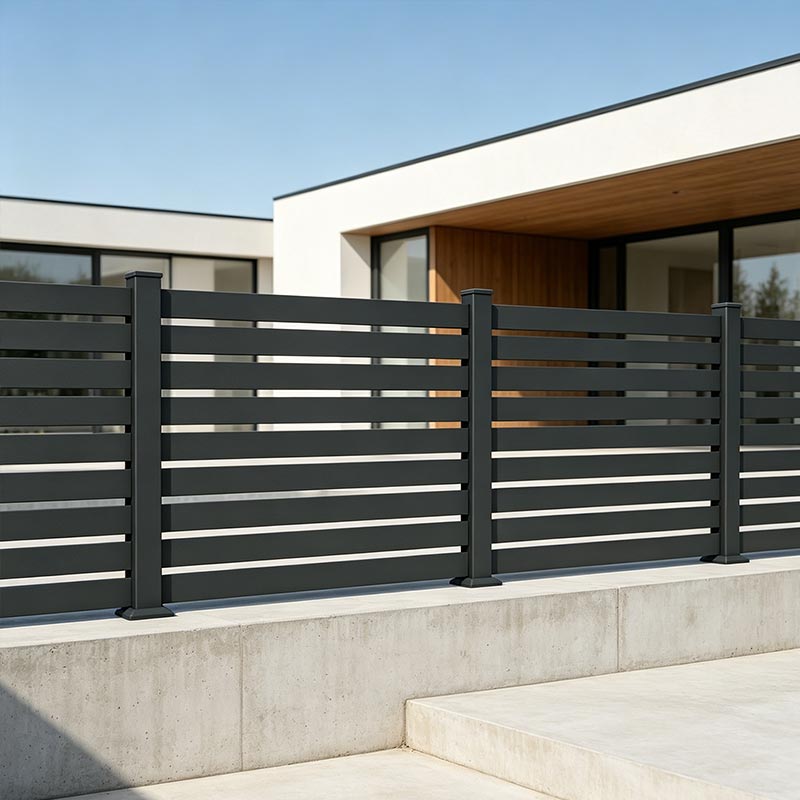
Coordinated aluminum fence systems can use matching slats, posts, and finishes where the entrance forms part of a perimeter design.
An automated gate may include remote controls, keypads, mobile access, photocells, safety edges, warning lights, emergency release hardware, and obstruction-reversal controls. List each component by model and electrical standard. Confirm the control voltage and manual-release method before installation. The installer should test each safety device after commissioning and record the result.
Request foundation and installation drawings before site work. Confirm packaging, lead time, shipment terms, warranty scope, spare parts, and technical support for the quoted product.
Wash the frame with mild soap, warm water, and a soft cloth or sponge. Keep drainage points clear. Inspect coating damage, joints, fasteners, hinges, rollers, tracks, locks, and safety devices on a schedule matched to traffic and exposure.
Use the hardware and motor manufacturers’ lubrication and service instructions. Record scratches, loose fasteners, alignment changes, unusual noise, and slow movement so the installer can address the cause before it affects operation.
An aluminum gate fits many residential, commercial, and selected industrial entrances that prioritize corrosion resistance, lower moving mass, finish options, and automation. Final approval should connect the material to the gate type, opening, infill, wind, cycle count, security target, hardware, posts, and foundation. A project drawing and component schedule turn those inputs into a buildable specification.
If You Want to Buy am Aluminum Gate:A Good Supplier Just Fit for you
Foshan JHR Smart Tech Co., Ltd. manufactures aluminum cantilever, sliding, swing, pedestrian, bi-folding, and industrial gates, along with fences and outdoor systems. Its services include OEM/ODM production, custom dimensions, colors, structures, branding, project drawings, installation guidance, and after-sales support.
For a project review, submit the clear opening, gate height, site photos, slope, available run-back space, infill preference, wind exposure, daily cycles, automation needs, safety devices, destination, and certification requirements. The team can prepare a gate-type recommendation, configuration review, drawing scope, and quotation.
Q1: What Are the Disadvantages of an Aluminum Gate?
A: Aluminum sections require project-specific sizing for large openings, solid infill, high wind, frequent cycles, and impact risk. An undersized frame increases loads on hinges, carriages, posts, and the operator. Reinforced profiles, larger supports, or steel may be required for high-impact duty. Use an approved drawing and wind-load basis for exposed sites.
Q2: How Long Does an Aluminum Gate Last?
A: JHR’s product FAQ gives a typical estimate of 20 to 30 years or more with proper maintenance. The estimate applies to maintained JHR aluminum gates; coating, hardware, environment, traffic, and installation affect the result. Confirm the warranty and maintenance schedule for the quoted model.
Q3: Is an Aluminum Gate Better Than a Steel Gate?
A: Aluminum suits projects governed by corrosion resistance and lower moving mass. Steel suits projects governed by rigidity and impact resistance. Compare the same opening, height, infill, wind load, security level, duty cycle, coating, and automation scope. A width-only comparison omits the main structural and operating conditions.
Q4: Can an Aluminum Gate Be Automated?
A: Yes. Aluminum sliding, swing, cantilever, and bi-folding gates can use suitable operators. Motor sizing follows leaf weight, opening, speed, wind load, slope, temperature, and daily cycles. Specify the motor, control voltage, manual release, photocells, safety edges, warning light, and obstruction reversal. Commissioning records should confirm each safety test.
Q5: Is an Aluminum Gate Suitable for Coastal Areas?
A: Aluminum is suitable for many coastal entrances when the project specifies the alloy, pretreatment, outdoor coating, corrosion-resistant hardware, drainage, and cleaning interval. Wash salt deposits from joints, fasteners, and sheltered surfaces according to the maintenance plan.